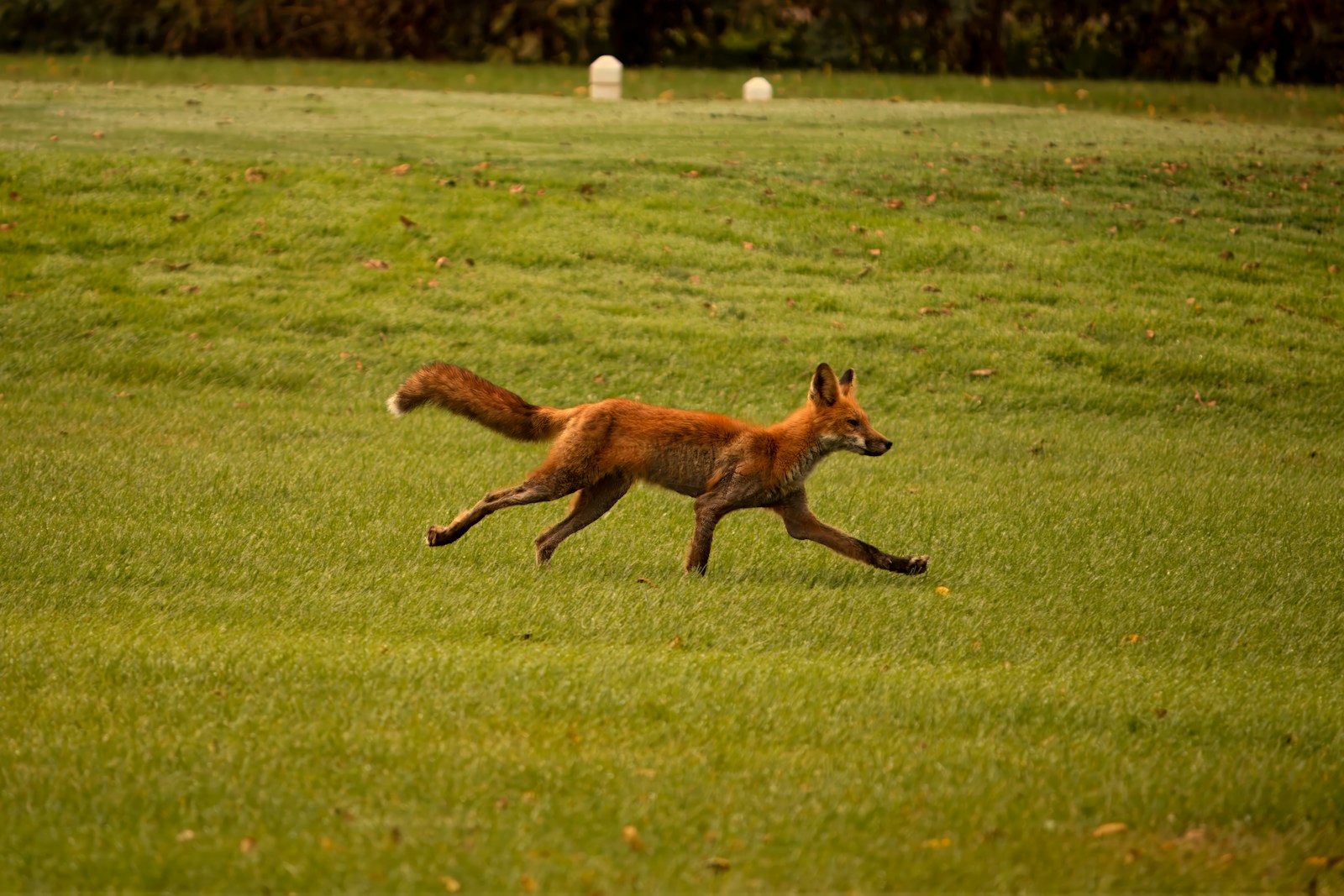
A homeowner east of Cincinnati told us last fall that she had stopped worrying about the tunnels in her front yard. A red fox had started crossing the property most mornings, and a pair of red-tailed hawks nested in the oaks behind her fence line. Nature, she figured, was about to handle it. By March the tunnels had doubled and the fox was still trotting through like a commuter.
She was not wrong about the fox. Foxes really do eat moles. So do owls, hawks, coyotes, snakes, and the occasional barn cat. What she was wrong about is what that eating actually does to the mole population under a lawn, which is close to nothing. We have trapped moles out of yards that sit next to woods full of predators, and the yards with the most hawks overhead are often the ones with the worst tunnel damage underneath. Here is why.
Key takeaways
- Foxes, coyotes, owls, hawks, snakes, and house cats all eat moles in Ohio and Kentucky, but none of them eat enough to protect a lawn.
- Moles spend almost their entire lives underground, so predators only catch them during brief surface moments, mostly young moles dispersing in late spring.
- Dogs and cats usually cause more lawn damage digging for a mole than the mole was causing in the first place, and they rarely finish the job.
- When a predator does kill a mole, the empty tunnel system is prime real estate, and a neighboring mole typically claims it within days or weeks.
- The only reliable way to clear a yard is trapping the active runways directly, which is exactly what a professional service does with a guarantee behind it.
What Eats Moles in Ohio and Kentucky?
Around Greater Cincinnati, moles are eaten by red foxes, coyotes, great horned owls, barred owls, red-tailed hawks, larger snakes like the black rat snake, and domestic cats and dogs. All of them take moles opportunistically. None of them hunt moles consistently enough to control the population under a lawn.
The predator list for our area is longer than most people expect. Red foxes and coyotes are both established across Hamilton, Clermont, Butler, and Warren counties, and across the river in Boone, Kenton, and Campbell. Both will grab a mole when they find one near the surface. Great horned owls and barred owls hunt at night, which happens to be when moles do more shallow work, and red-tailed hawks will take one in daylight if it shows itself. Black rat snakes eat small mammals, and a mole that pushes through the side of a chipmunk tunnel can end up on that menu too.
Then there are the pets. Cats are genuinely effective mole killers when they catch one, and a farm cat working a fence line will pile up a surprising body count over a summer. Dogs, especially terriers bred for exactly this work, can smell a mole working a shallow runway and will absolutely try to dig it out.
So the cast of characters is real. The question that matters for your lawn is different: with all of those predators working the same ground, why did the tunnels get worse this year?
Why Is the Lawn Still Wrecked If Predators Eat Moles?
Because predators almost never get access. A mole lives in a sealed tunnel system and can pass its entire adult life without spending an hour above ground. Predation happens at the margins, mostly to young moles crossing the surface, while the adult digging up your yard stays out of reach.
The mole’s whole survival strategy is the tunnel. An eastern mole works a network that runs from a couple of inches below the turf down to a foot and a half or more, and it patrols that network on a cycle, eating the earthworms and grubs that fall into it. It does not come up to feed. It does not come up to drink. The dirt you see in a molehill was pushed up, not carried up by a mole standing on your lawn.
That means a fox crossing your yard and a mole working under it can share the same square of ground for years and almost never meet. The fox smells the mole. The mole feels the footsteps and goes deeper. We wrote about this in our post on the behavior of ground moles: the animal is built to detect vibration and vanish downward, and it is exceptionally good at both.
The moles that do get eaten are mostly the young ones. Juveniles get pushed out of the home tunnel system in late spring and early summer, and they disperse above ground looking for unclaimed territory. That surface trip is the most dangerous stretch of a mole’s life, and owls and foxes collect a real toll on it. But notice what that means. Predators are filtering the moles that have not found a yard yet. The established adult with a full tunnel system under your grass has already survived the filter.
Do Owls and Hawks Keep Mole Numbers Down?
Owls take more moles than hawks because they hunt at night, when moles do their shallowest work. But moles are a minor item for both. Studies of owl pellets consistently show voles and mice as the bulk of the diet, with moles appearing only occasionally. Neither bird controls a mole population.
If you pull apart owl pellets from a barred owl roost in southwest Ohio, and wildlife biologists do exactly that, you find them packed with vole and mouse remains. Moles show up, but as an occasional item, not a staple. The reason is the same access problem. A vole runs surface trails all night and is catchable every night. A mole surfaces rarely and irregularly, so it never becomes a dependable food source worth specializing in.
Hawks have it even harder because they hunt by sight in daylight, and a mole above ground in daylight is a rare event. When it happens, usually a young mole dispersing or an adult flooded out by a storm, a red-tailed hawk will take the free meal. That is the level of pressure we are talking about: free meals, taken when offered. It is nothing like the sustained, targeted hunting that would be needed to empty the tunnel system under your yard.
We covered what actually drives mole activity in what ground moles eat, and it is worth reading next to this piece. Mole numbers in a yard track food supply underground, not predator pressure above it. A lawn rich in earthworms will hold moles no matter how many owls are in the trees.
Will a Cat or Dog Get Rid of Moles?
Occasionally a cat or terrier kills a mole, and the owner gets a trophy on the porch. But pets do not clear yards. Cats catch moles only during rare surface moments, and a digging dog typically tears up more turf in one afternoon than the mole damaged all month.
We get this question on the phone constantly, usually as “should I just let the dog have at it?” Please do not. We have walked onto properties where the mole had raised a few ridges across the back lawn, annoying but repairable, and the family dog had then excavated craters the size of laundry baskets chasing it. The mole was still in residence. The lawn looked like a construction site.
Cats are the more efficient hunters of the two, and an outdoor cat that works your yard at dawn and dusk will occasionally intercept a mole in a shallow runway. If your cat leaves you one on the doormat, that is a real kill and you are allowed to be impressed. It is still not control. The cat caught a moment of bad luck for one animal. The tunnel system is still there, the food supply is still there, and the vacancy is already being advertised.
There is also a real safety point here. Moles carry the same parasites most wild mammals do, fleas and ticks included, and a pet that mouths a mole is picking those up. A dead mole in the yard is better lifted with a bag than left for the dog.
Do Snakes Eat Moles Around Here?
Sometimes. Black rat snakes and other larger snakes in Ohio and Kentucky will eat a mole they can reach, but snakes hunt the easier small mammals far more often. Voles, mice, and chipmunks make up most of the mammal portion of their diet. No local snake meaningfully reduces moles.
The black rat snake is the biggest snake most Cincinnati area homeowners will ever see on their property, and it is a legitimately useful animal to have around, mostly because of what it does to mouse and chipmunk numbers. It can and will take a mole when the opportunity comes, typically a young one, sometimes by entering tunnel systems the way it enters chipmunk burrows.
But the same theme repeats. The snake is an opportunist, the mole is a hard target, and the easy targets are everywhere. A rat snake that can eat every third chipmunk it meets has no reason to specialize in an animal it encounters a few times a season. If you have been leaving snakes alone hoping they would handle the tunnels, keep leaving them alone, they are good neighbors, but stop expecting mole results from them.
Why Does a New Mole Show Up Right After One Dies?
Because an empty tunnel system is the most valuable property in the neighborhood. Digging is the most expensive thing a mole does, so when a resident dies, a dispersing or neighboring mole moves into the ready-made network, often within days. The predator created a vacancy, not a solution.
This is the part that finally makes the predator math click for most people. Suppose the fox gets lucky. It catches your resident mole above ground during a summer storm and that particular animal is gone. What remains is hundreds of feet of tunnel, pre-dug through the best earthworm ground on the street, with nobody home.
Every young mole dispersing across the surface that season is searching for exactly that. Taking over an existing network costs a fraction of the energy of digging a new one, so vacancies fill fast. This is why homeowners who go after moles one at a time, whether by predator, shovel, or luck, so often swear the same mole keeps coming back from the dead. It is not the same mole. It is the same tunnel system under new management, and most yards are only hosting one or two moles at a time to begin with.
Real control has to account for the refill. That is why our mole removal service does not stop at the first capture. We keep working a property until the activity stops, and we stand behind it with a guarantee, because we know the second wave is part of the job.
What Actually Clears Moles Out of a Yard?
Mechanical trapping on the active runways. Traps sit inside the tunnel system, work around the clock, and are there when the refill mole arrives. It is the method every serious wildlife operation uses, and the one we guarantee. Predators, repellents, and grub treatments all fail for the same reason: they never touch the tunnels.
Everything predators cannot do, a properly set trap does. It is underground, inside the runway, exactly where the mole must pass on its feeding circuit. It works at 3 a.m. when the owls are hunting voles instead. It does not lose interest, and when a new mole claims the vacant system, the trap is already waiting in the main run.
The craft is in reading which tunnels are active, and that is genuinely the hard part. Most of the network under a damaged lawn is abandoned at any given moment, and a trap in a dead tunnel catches nothing forever. If you want to understand the full picture of how professionals approach it, our guide to trapping moles walks through runway identification, trap types, and why placement beats every gadget on the market. And if you have already been down the grub-treatment road, we explained why treating grubs will not remove moles: earthworms, not grubs, are the bulk of the diet, so a mole in a grub-free lawn just keeps eating worms.
For homeowners around Cincinnati and Northern Kentucky, this is the whole service we have built our name on. A+ rated with the BBB, guaranteed mole removal, and it starts with a free phone estimate, no sales visit needed. Tell us what you are seeing in the yard, and we will tell you honestly whether it is moles, voles, or something else before anyone commits to anything. Call (513) 518-5639 or request a quote.
Enjoy the fox. Keep the owls. Just do not put them on the payroll.
Common Questions
Do moles have natural predators?
Yes. In Ohio and Kentucky, moles are eaten by foxes, coyotes, owls, hawks, larger snakes, and domestic cats and dogs. But because moles live almost entirely underground, predators catch them only in rare surface moments, so predation never controls the mole population under a lawn.
What animal kills the most moles?
Owls likely take the most, because they hunt at night when moles work closest to the surface, and young dispersing moles cross open ground after dark. Domestic cats are close behind in suburban yards. Even so, moles are a minor part of every predator's diet compared to voles and mice.
Should I let my dog dig for moles?
No. A digging dog usually tears up far more turf than the mole has damaged, and it rarely gets the mole, which retreats into deeper tunnels. There is also a parasite risk, since moles carry fleas and ticks like most wild mammals. Trapping the runway is cleaner and actually works.
If predators eat moles, why do I keep getting new ones?
Because an empty tunnel system attracts replacements. Digging is the most energy-expensive thing a mole does, so when a resident mole dies, a dispersing or neighboring mole claims the ready-made network, often within days or weeks. Removing moles one at a time never ends the cycle on its own.
Can I attract owls or foxes to control moles naturally?
You can attract them, and they are good for a property, but they will not fix a mole problem. Owl boxes and wildlife-friendly yards help with voles and mice, which predators can actually reach. Moles stay protected underground, so the tunnels continue no matter how healthy your predator population is.
Photo by Joseph Wiley on Unsplash.