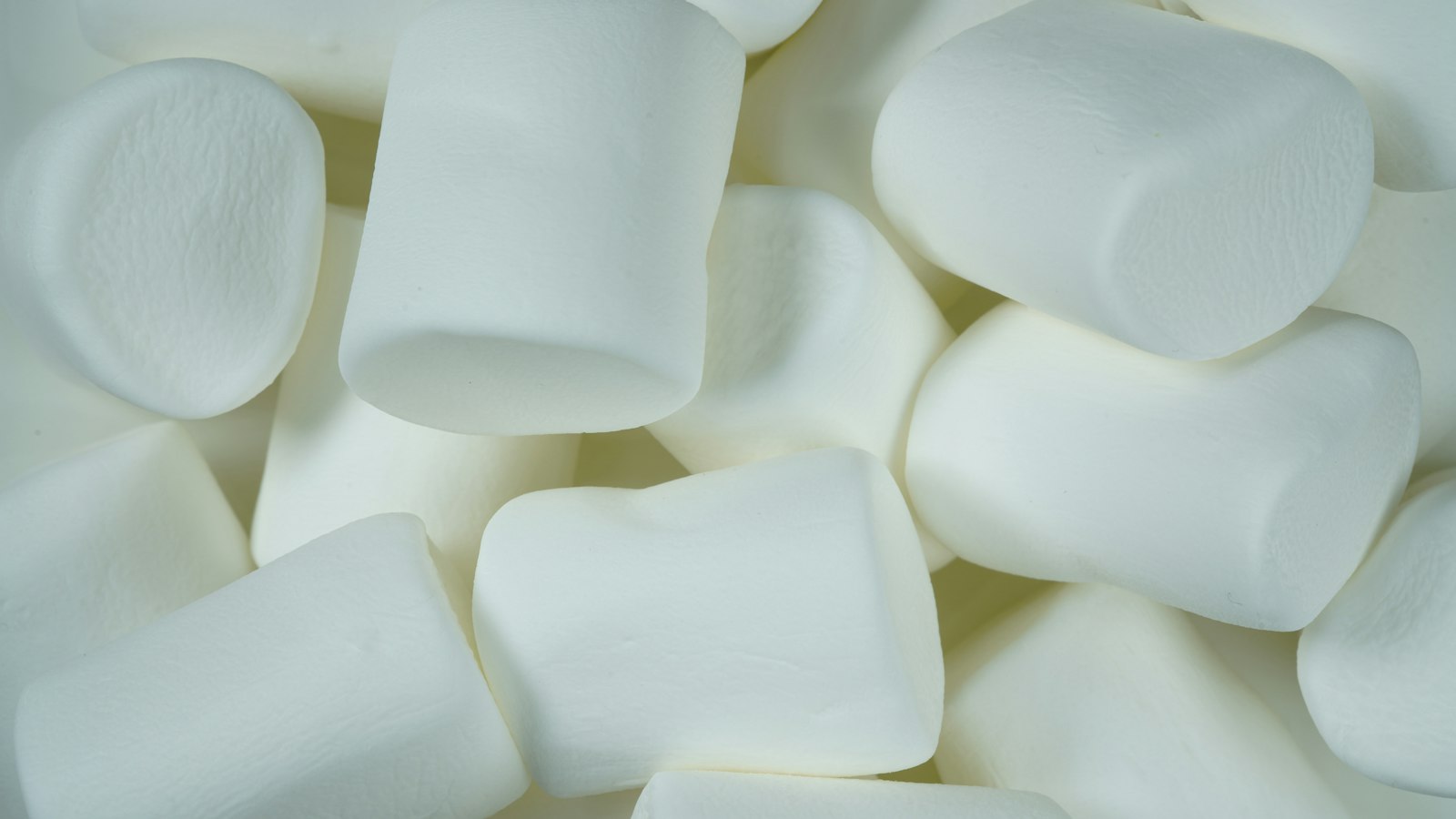
The marshmallow question arrives more often than you would guess, and it almost always arrives the same way. Somebody saw a video. A pair of hands pushes mini marshmallows down a run with a stick, the clip cuts, and the next shot is a calm lawn. It costs almost nothing to try, which is the entire reason it spreads.
So here is the full answer from people who trap these animals for a living. What a marshmallow actually is, what a mole is actually built to eat, what happens to a lump of sugar sitting in wet clay, and the part of this tip that nobody passing it along ever mentions.
Key takeaways
- Marshmallows do not kill ground moles. A mole is an insectivore that hunts live earthworms and grubs by touch, and a sugar confection is not food to it.
- The "gums up their insides" idea has no mechanism behind it. The animal has to eat the marshmallow first, and it does not eat it, so nothing downstream of that ever happens.
- A marshmallow does not survive in a tunnel anyway. Sugar and gelatin pull in water fast, and in damp Ohio Valley clay the whole thing softens and collapses into the soil within a day or two.
- The tip has a real downside nobody mentions. Sugar left in a lawn draws ants, and it can bring in skunks and raccoons that dig for food, which turns one yard problem into two.
- Trapping an active run is what actually removes a mole, because it takes out the resident animal instead of trying to talk it into leaving.
- Trap Your Moles is licensed and insured and guarantees mole removal across Greater Cincinnati. Free phone estimate at 513-518-5639, no sales visit needed.
Do Marshmallows Kill Ground Moles?
No. Moles are insectivores that hunt live earthworms and grubs by touch, so a marshmallow is not food to them and does not get eaten. The myth claims the sugar blocks the animal's digestive tract, but that requires it to swallow the marshmallow first, and it never does.
The logic of the tip is tidy, and tidy is why it travels. Moles are in the ground. Marshmallows fit down a hole. Sugar is bad for you. Therefore put the sugar down the hole and the mole is done. Every link in that chain sounds fine in a kitchen and none of them holds up in a yard.
The thing that gets skipped is the animal itself. A mole is not a raccoon that will try anything, and it is not a mouse that will nibble whatever it finds. It is a specialist. It spends its life moving through soil hunting prey that moves, and it is built for that one job down to the shape of its teeth. Offering it a marshmallow is like leaving a bowl of cereal out for a hawk.
So work through it properly, starting with where the idea came from in the first place.
Where Did the Marshmallow Myth Come From?
It spread through short videos and social posts, not through research. Search results for the method are dominated by YouTube, Facebook and Pinterest, with almost no extension or wildlife sources in the mix. That is the signature of a tip that circulates because it is cheap and easy to film, not because anybody tested it.
Look at who is actually publishing this. Pull up the method and you get video thumbnails, a pinboard, and a landscaping blog or two. What you do not get is a university extension service, a state wildlife agency, or anyone whose name is attached to the outcome. Compare that to almost any real question about moles, where the extension pages turn up immediately.
There is also a reason this myth is impossible to kill, and it is worth understanding because it applies to every home remedy on the list. Moles are solitary and territorial. One animal works a yard. Mole activity is also naturally uneven: a mole follows worms, and worms follow moisture, so a mole will work the front lawn hard for two weeks and then shift to the back fence line because that is where the food went. A homeowner who puts marshmallows down on Saturday and sees no fresh ridges by the following weekend has watched a mole do something moles do on their own.
Then they tell a neighbor it worked. The neighbor tries it. Somewhere in there a mole genuinely does move on, and the story gets a little stronger every time it is retold. That is how a remedy with no mechanism behind it ends up with hundreds of people a month searching for instructions.
What Do Moles Actually Eat?
Earthworms, grubs and soil insects. An eastern mole eats close to its own body weight every day and finds prey by touch, using dense receptors on its snout called Eimer's organs to read movement in the soil. It is not out there foraging for anything sweet.
The full picture is in our breakdown of what do moles eat, but the short version matters here. Earthworms are the staple. Grubs and other soil insects fill in around them, which is the reason the grub question comes up so often and the reason killing grubs does not clear a mole out of a yard with a healthy worm population.
What drives all of it is metabolism. A mole eats close to its own body weight in a day and carries almost no reserve, so it is hunting constantly. That is the actual engine behind the damage in your lawn. Those surface ridges are not vandalism, they are a feeding route.
Now look at the equipment. A mole’s teeth are small, sharp and pointed, shaped for gripping a worm that is trying to get away. They are not grinding teeth. The animal has no reason to process plant matter and no gear for it, which is also why moles do not eat bulbs or plant roots no matter what the garden is doing.
And the hunting is done by feel. The snout is packed with Eimer’s organs, touch receptors dense enough to read texture and movement in the soil the way fingertips read braille. A mole is following a worm that wriggles. A marshmallow sits there. To an animal navigating by movement in the dark, it barely registers as a thing at all.
What Happens to a Marshmallow in a Mole Tunnel?
It dissolves. Marshmallow is sugar, corn syrup and gelatin, all of which absorb water quickly. Pushed into a run in the damp clay soils across southwest Ohio and northern Kentucky, it softens, slumps and is gone into the soil within a day or two, usually before a mole passes that spot again.
This is the part people never check, because checking means digging up a tunnel two days later and almost nobody does that.
Soil here works against the idea from the start. Southwest Ohio, northern Kentucky and southeast Indiana are largely clay, and clay holds moisture. A marshmallow is mostly sugar and gelatin whipped around air, and both of those are hungry for water. Put one into a damp run and it does not sit there as a tidy white lure. It goes sticky, it sags, it loses its shape, and it works its way into the surrounding dirt.
Then there is the question of which tunnel it even went into. The ridges you can see and push a marshmallow down are feeding runs, the shallowest layer of the system. The permanent travel tunnels and the nesting chamber sit well below them, as we laid out in how deep moles dig. So the standard version of this tip puts a dissolving piece of candy in the top floor of a building whose occupant mostly lives in the basement.
Even in the best case for the myth, where a mole does come back through that exact stretch of run while the marshmallow is still recognizable, the animal does what it does with every obstruction. It shoves it aside, packs it into the tunnel wall, or digs a short detour around it. Moles reroute constantly. That is the whole skill set.
Can Sugar Really Gum Up an Animal’s Insides?
No. The claim is borrowed from older rodent folklore and it does not survive contact with how a mole feeds. Sugar is water soluble, so it dissolves rather than forming any kind of blockage, and the animal would have to eat the marshmallow for the question to arise at all.
This is the same category error we walked through when we tested the Juicy Fruit gum story, and it fails in exactly the same place. Both myths skip straight past step one. They describe in confident detail what happens inside an animal that was never going to eat the thing in the first place.
It is also worth noting what a marshmallow is made of, because the irony is good. Gelatin is animal protein, rendered collagen. So the one ingredient in there that came from an animal still is not remotely what an insectivore eats, and the sugar it is suspended in is the single most water soluble thing you could put in wet ground. Nothing about the recipe produces a blockage. It produces sweet mud.
The deeper problem is that this family of remedies all shares one assumption: that there is a clever trick, and that the people who charge money for mole work either do not know it or do not want you to. We get asked some version of that constantly, which is why we have worked through vinegar, gum, castor oil and sonic spikes one at a time in public. If any of them worked reliably we would use it. It would be far easier than what we actually do.
Will Marshmallows Hurt Anything Else in Your Yard?
They can, and this is the part the tip never mentions. Sugar worked into lawn soil draws ants, and it can pull in skunks and raccoons that dig for food. A yard that started with one mole can end up with fresh digging from something else entirely.
A mole will ignore your marshmallows. Plenty of other things in a Greater Cincinnati yard will not.
Ants find sugar fast, and a yard that already has a mole usually has the moist, insect rich soil that ants like anyway. That is the mild version. The one we actually see is the digging. Skunks and raccoons work lawns at night for grubs and worms, and they have no trouble locating something sweet near the surface. Their digging looks nothing like mole work. It is small cone shaped holes and flipped up sod, and it shows up overnight.
So the honest accounting on this remedy is not that it does nothing. Doing nothing would be fine. It is that you can spend a Saturday salting your lawn with sugar, get no effect whatsoever on the mole, and give something larger a reason to come have a look. If that happens, raccoons become their own removal job, and now there are two things wrong with the yard.
This is the pattern across home remedies generally. The ones that truly do nothing waste a weekend. The ones that do something usually do the wrong thing, like castor oil pushing a mole into a neighbor’s yard and back, or soaking a lawn hard enough to burn the turf you were trying to protect.
What Actually Gets Rid of Ground Moles?
Trapping an active run. A trapper locates a main travel run, confirms it is in use, and sets so the trap intercepts the animal on its next pass. Because moles are solitary and territorial, removing the resident animal normally settles the yard and the surface damage stops progressing.
The honest version of this is less exciting than a video, and it is the only thing that reliably works. Everything in our guide to trapping moles comes down to two judgments, and neither one is about the trap.
The first is finding a main run instead of a feeding run. Most of the ridges crossing a lawn are exploratory, dug once while hunting and never used again. Setting there catches nothing, and it is the single most common reason a homeowner’s own trap sits untouched for three weeks. A main run tends to be straighter, it tends to follow an edge like a driveway, a foundation or a fence line, and it tends to reappear in the same place after you knock it down.
The second is confirming the run is live before anything gets set. Press a short section of the ridge flat with your foot and mark the spot. Come back in a day or so. If the tunnel has been pushed back up, the animal is using that route and that is where a trap belongs. If it is still flat, it is an abandoned hunting run no matter how fresh the dirt looked.
That test is free and anybody can run it. We are telling you about it on purpose, because the number one thing we hear from people who tried to handle it themselves is not that trapping failed, it is that they were setting in the wrong tunnel.
The rest is experience: reading which direction the animal travels, setting the trap so it sits correctly in the run, and checking it on a schedule. Because moles are territorial, one yard almost always means one animal, which is why a correctly set trap line settles a lawn instead of starting a season long campaign.
That is the whole of what our mole removal service is: find the live run, set it properly, and keep after it until the yard is quiet. It is unglamorous work, and it is the reason we can guarantee the result when a bag of marshmallows cannot.
When It Might Not Be Moles at All
Before anybody spends money, including on us, make sure of what you have.
Raised ridges that you can feel sink underfoot, plus volcano shaped mounds of loose soil with no open entry hole, are moles. Chewed roots, missing bulbs, gnawed bark at the base of shrubs and open runways at the surface point to voles, which are rodents and a completely different job with a completely different fix. We cover that under vole removal. Soft spongy ground with no tunneling at all is usually drainage.
Treating one animal as another is the most common way a removal plan fails before it starts, and it is also the most common way people conclude that nothing works. If you describe what you are seeing over the phone, we will tell you which one it sounds like. If it turns out to be voles, or drainage, or a skunk working the lawn for grubs, we will tell you that too.
What To Do Instead of the Marshmallows
Keep it short. First, confirm what you have using the damage signs above. Second, run the flattened run test so you know whether anything is actually active out there. Third, stop buying remedies, because the running total on gum, vinegar, granules, spikes and grub treatment across one season adds up quietly and never once feels like a decision.
Then call and describe the yard. We will tell you on the phone whether it sounds like moles, what the yard likely needs and what it costs, with no sales visit and no obligation.
We are licensed and insured, we guarantee the removal, and we work lawns right across Greater Cincinnati, from Cincinnati out through northern Kentucky and up toward Dayton. Call 513-518-5639 for a free phone estimate, or reach us here, and if the ridges are spreading it is worth getting it looked at before the lawn needs repair as well as the mole needs removing.
The short version for a neighbor over the fence: a mole eats living worms it finds by touch, a marshmallow is sugar that melts into wet clay in a day, and the only thing in your yard likely to come looking for it has a tail and works nights. Skip it, find the active run, and get the animal trapped out.
Common Questions
Do marshmallows kill moles?
No. Moles are insectivores that hunt live earthworms and grubs by touch, so a marshmallow is not food to them and does not get eaten. The claim that sugar blocks the animal's digestive tract depends on it swallowing one first, which does not happen. There is no research behind the method and no mechanism that would make it work.
How do you get rid of ground moles with marshmallows?
You do not, and the instructions circulating online do not produce a result. The usual version is to push mini marshmallows down an open run and cover the hole. In damp clay soil the marshmallow absorbs water and collapses into the dirt within a day or two, and a mole that passes the spot simply pushes the remains aside or digs around them.
What is the best thing to kill ground moles?
Trapping is the only approach that reliably removes the animal, and it works because it physically takes the resident mole out rather than trying to persuade it to leave. The thing that decides whether it succeeds is run selection: a trap set in an abandoned feeding ridge catches nothing, while one set in a confirmed active travel run usually settles the yard.
Will Dawn dish soap get rid of moles?
No. Dish soap is a surfactant, so it spreads water through soil and does nothing to remove an animal living in it. A soap drench does have one legitimate lawn use, which is flushing grubs to the surface so you can count them during an inspection, but that is a diagnostic for turf insects and not a mole treatment.
What do golf courses use to keep moles away?
Course superintendents handle moles the same way we do, with ongoing trapping and monitoring rather than a product. A course cannot tolerate surface damage on playing surfaces and has every reason to use something easier if one existed, so the fact that trapping remains the standard approach on managed turf is a fair answer to whether the home remedies work.