Mosquito and Tick Control in Cincinnati, Dayton & Northern Kentucky
Mosquitoes and ticks are a yard problem before they are a bite problem. Both live in specific, findable places on your property, and treating those places is what actually reduces the population. We treat residential yards and commercial grounds across the tri-state, starting with the least aggressive approach that will do the job.
How this differs from our trapping work
Straight answer, because our customers deserve one. Our mole, groundhog, raccoon, and squirrel work is 100% mechanical: traps and exclusion, no poison, ever. That has not changed and it is not going to.
Mosquito and tick control is different work, and pretending otherwise would be dishonest. You cannot trap a mosquito population out of a two-acre yard. Reducing them means treating the places they breed and the places they rest.
So here is the standard we hold ourselves to on this service:
Habitat first, chemistry second
A large share of the job is finding and eliminating the standing water on your property: clogged gutters, tarps, saucers under planters, that low spot by the downspout. Every container we empty is a generation of mosquitoes that never happens, with nothing applied at all.
Lowest effective toxicity
Where water cannot be drained, we treat the larvae in it rather than blanketing the yard for adults. Adult treatment is targeted at the shaded resting areas mosquitoes actually use during the day, not sprayed wall to wall because it looks thorough.
You know what is applied, and where
Before we treat, you get told what is going down, which areas it touches, and how long to keep kids and pets off it. Same as we have always shown you exactly where every mole trap is set.
You can ask for the no-spray plan
If you would rather nothing be sprayed at all, say so. We will build the program around water elimination, habitat reduction, and larvicide only. It asks more of you between visits and it works more slowly, but it is a real option and we will tell you honestly how far it gets you.
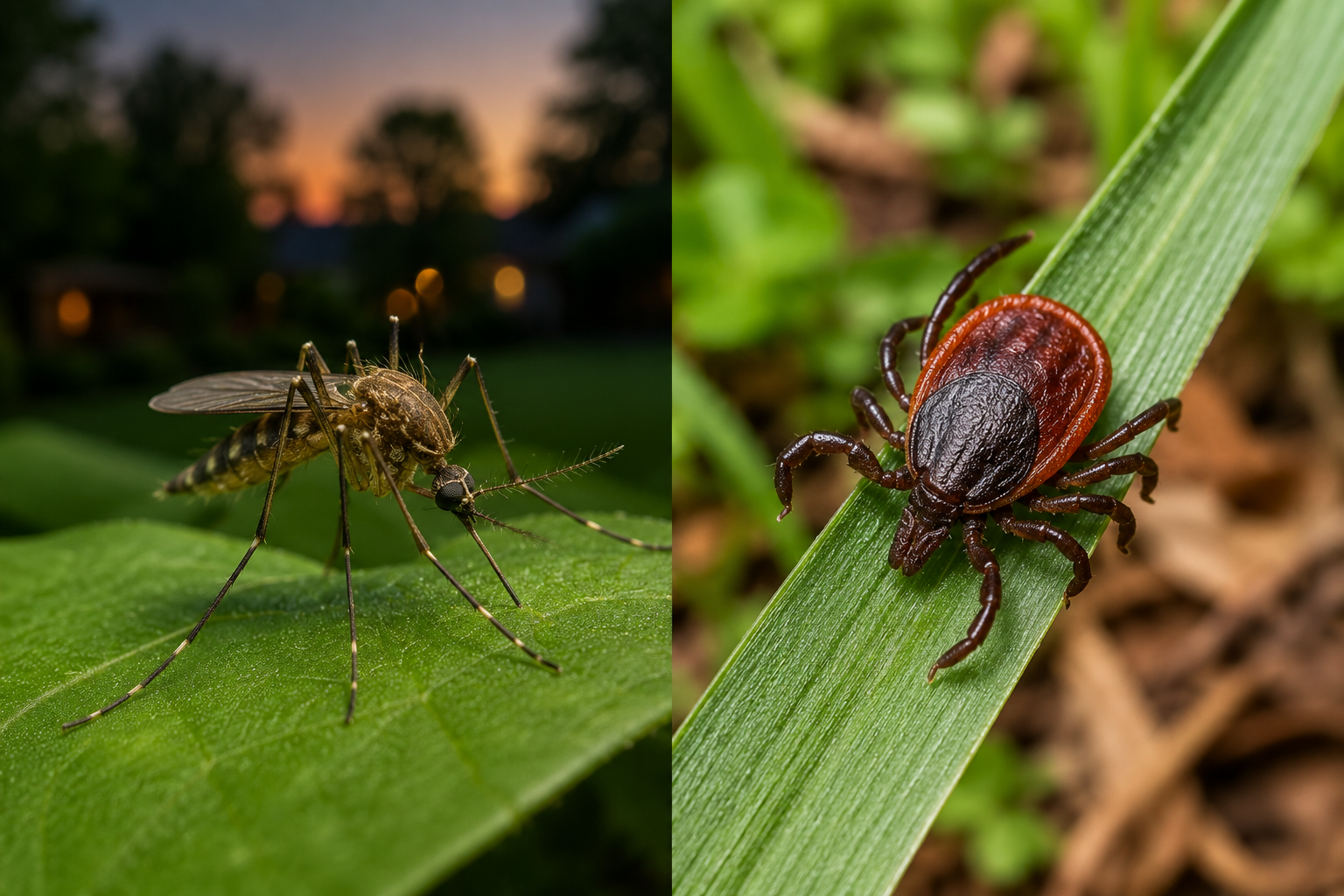
Two pests, two completely different hiding places
This is why a yard treated only for mosquitoes still hands you ticks. They do not live in the same part of your property.
MOSQUITOES
Where they breed: standing water, and far less of it than people expect. A bottle cap's worth is enough for some species. Gutters, tarps, toys, planter saucers, tire ruts, birdbaths.
Where they rest: shaded, humid, still air, the underside of dense shrubs, ivy, tall grass along a fence line, under decks.
Why it matters: a neighbor's untreated gutter can re-supply your yard, which is why we look at the property line and not just the lawn.
TICKS
Where they live: low and at the edges. Leaf litter, tall grass, ground cover, and especially the transition zone where mown lawn meets brush or woods.
How they find you: they climb a grass blade and wait. They do not jump or drop from trees, whatever you have heard.
Why it matters: the treatment that matters most is the perimeter, plus keeping that lawn-to-woods edge cut back. Deer and mice moving through a property keep restocking it.
Tick control in Cincinnati yards
Direct answer
Tick control in Cincinnati means treating the places ticks wait for a host: the lawn edge along brush and woods, leaf litter, tall grass, fence lines and shaded beds. We treat those zones in the same visit as mosquitoes, across Greater Cincinnati, Dayton and Northern Kentucky, and keep going through October and November, when adult ticks peak again.
Most Cincinnati yards that have a tick problem have it at the back edge. The lots that back onto a wooded ravine, a creek or an unmown field get the most pressure, because deer and mice walk that line every night and keep restocking it. The open middle of a sunny lawn is rarely where the bite comes from.
So the treatment follows the edges, not a blanket spray. We walk the property, find the transition zone, the leaf piles, the ground cover and the spots the dog favors, and treat there. You are told what is applied and where, with the re-entry time, before anything goes down. If you want nothing sprayed at all, ask about the no-spray plan.
Fall is the part most people skip. Ticks stay active any time the ground is above roughly 40 degrees, and the adults peak again in October and November, well after most spray companies have closed out the season. Call (513) 518-5639 for a free estimate on your yard.
The same treatment also hits fleas, ants, spiders, wasps, termites and cockroaches
What we apply for mosquitoes and ticks also works on six other pests that share your yard. You are not paying for a second treatment. It is the same visit, in the same shaded beds, fence lines and edges.
Fleas
Outdoor fleas wait in shaded, damp spots, the same places a dog likes to lie down. Treating them in the yard means fewer fleas riding back inside. Your pet still needs flea protection from your vet.
Ants
Foraging ants in treated beds, along the foundation edge and across patios drop with everything else. A colony already living inside a wall or under a slab is a separate job.
Spiders
Spiders build where insects are easy to catch: shrubs, deck rails, fence lines. Fewer mosquitoes means less for them to eat, and the treatment reaches the spiders themselves in the same spots.
Wasps
Wasps and yellowjackets foraging and starting nests in treated shrubs and ground cover get hit too. If you already have a big, active nest, tell us before the visit so the technician plans for it.
Termites
Termites that come up into the treated soil along your foundation and in mulch beds die on contact. That is a bonus, not termite protection for the house. If you see swarmers, mud tubes or soft wood, you need a termite inspection, and we will tell you that straight.
Cockroaches
Outdoor roaches living in mulch, leaf litter and around the foundation are killed where we treat, so fewer of them find a way inside. Roaches already living in the house need an indoor treatment.
Year-round protection, not a summer patch
The plan we recommend for most properties is a ten-visit annual program, covering every month of the year except the two coldest of winter. It is the same thinking behind our mole work: stay on the property on a schedule, and the problem never gets the chance to rebuild.
Ticks do not take the fall off
Adult blacklegged ticks have a second activity peak in October and November, and they keep questing any time the ground is above roughly 40 degrees. That is well after most spray companies have shut the season down, and it is exactly when a lot of exposure happens.
Every fall generation stopped is one you skip in June
Late-season work targets the females that would otherwise overwinter, and the containers holding eggs waiting on the first warm rain. Spring then starts from a smaller number instead of a full one.
You never restart from zero
A yard held on a continuous schedule keeps a lower baseline from one year to the next. A yard treated only from May to August resets every spring, and the first six weeks of the season get spent catching back up.
Shorter plans are available. Six-month and seasonal schedules exist and for some properties they are genuinely the right call. A yard with no wood line and no standing water nearby has a shorter risk window than one backing onto brush. We will tell you which one your property actually needs at the walkthrough, rather than pointing you at the longest one by default. Most commercial and HOA properties choose the annual program.
Residential mosquito and tick control
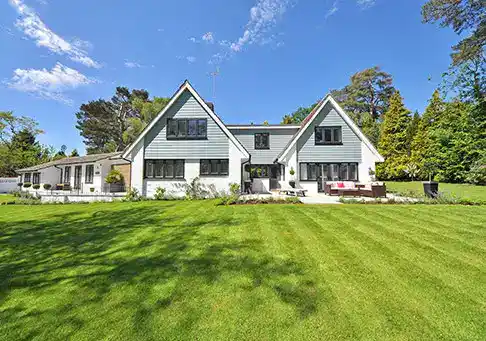
Your back yard is supposed to be the easy part of summer. If you are eating dinner inside with the doors shut, or checking the kids and the dog for ticks every time they come in from playing, the yard is not doing its job. That is the call we get most, and it is very fixable.
We walk the whole property, find the standing water and the shaded spots mosquitoes actually use, and treat the edges where ticks wait. Play sets, decks, patios and garden beds all get looked at individually, and you are told exactly what is applied and where before anything goes down. Families who want no spraying at all can ask for the no-spray plan and we will build around it.
Most homes go on the same ten-visit annual program our commercial clients use, because the biology does not care whose name is on the deed. Protect yourself, your family, your pets no matter what time of year it is.
Get a Free Yard EstimateCommercial and HOA mosquito control
For a property manager, mosquitoes and ticks are not a comfort issue. They are an occupancy issue and a liability one. Residents stop using the amenity you pay to maintain. Events get moved indoors. Tick exposure on a shared common area is a conversation nobody wants to have.
We work with HOAs, property managers, office parks, golf courses, and event venues across Greater Cincinnati, Dayton, and Northern Kentucky. Most commercial properties are written as the ten-visit annual program, so the grounds are covered through the fall tick season and not just the summer. Scheduling works around your calendar, including pre-event treatment timed so the grounds are ready when people arrive.
Request a Property Walkthrough
When treatment actually needs to start in the Ohio Valley
The single most common mistake is calling in July. By mid-summer the population has already compounded through several generations, and you are paying to knock down a problem that was far cheaper to prevent.
Late March to April
Ticks become active as soon as the ground warms past roughly 40 degrees. Perimeter and leaf-litter work starts here.
Late April to May
Mosquitoes emerge as overnight lows hold in the 50s. Water elimination now prevents the generations that would otherwise arrive in June.
June to August
Peak mosquito pressure, and the stretch where a recurring schedule matters most. Heavy rain weeks may need attention sooner.
September to December
The stretch most companies skip. Adult ticks peak in October and November, and treating now cuts what overwinters into next spring.
Get ahead of the season and you spend the summer using the yard instead of taking it back. Autumn matters just as much. That is when tick exposure runs highest, and when next year's mosquito population is quietly decided. Protect yourself, your family, your pets no matter what time of year it is.
Mosquito and Tick Control: Common Questions
Straight answers about treatment, timing, and what we apply.
Get your yard back
Free estimate, no on-site sales visit. Tell us about your property and we will tell you honestly what it needs.