The Complete Guide
Trapping Moles: How It Actually Works
Trapping is the only mole control method with consistently documented results, because moles are insectivores that ignore the baits, repellents, and sound gadgets sold for rodents. This guide covers how mole traps work, which type to use, why most DIY sets fail, and when it is worth calling a specialist.
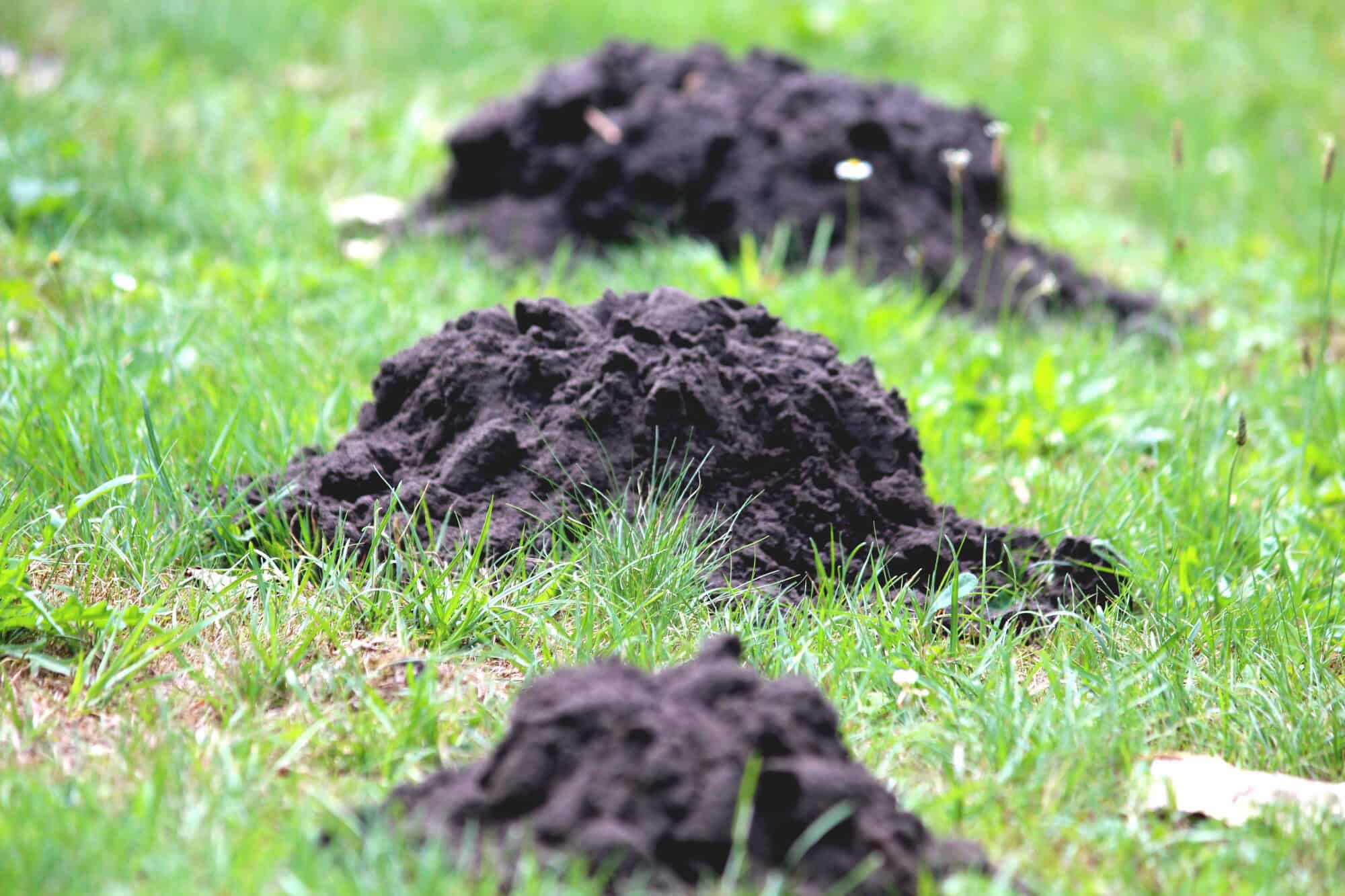
The short version
Find a tunnel the mole is actually using, prove it is active by collapsing a section and seeing whether it gets repaired within a day or two, then set a mechanical trap at the true depth of that runway. Scissor traps for deep main runs, harpoon traps for shallow surface ridges, enclosed box traps where pets and children are around. Check daily. A correct set in an active runway usually produces a catch within one to three days, and the reason most DIY attempts fail is tunnel choice rather than trap choice.
Why Trapping Moles Works When Nothing Else Does
Every failed mole product fails for the same reason: it treats a mole like a rat. Moles are insectivores. They live almost entirely on earthworms and grubs, hunting them through a private tunnel network they rarely leave. They will not surface to take a bait station, they do not eat seeds or grain, and decades of university extension testing has found no repellent, vibration stake, or home remedy that reliably moves them out.
A mechanical trap flips that biology into an advantage. The tunnel system that protects the mole also makes it perfectly predictable: it must patrol its main runways to eat, several times a day. Put the right trap in the right runway and the mole delivers itself. No attractant needed, no poison in your soil, and a physical catch you can confirm, which is why trapping is the standard that lawn care companies, extension offices, and we ourselves stake results on.
Scissor Traps
Twin jaws set astride the runway, fired by a trigger pan the mole pushes as it reopens the tunnel. The workhorse for the deep main runways common in Ohio clay.
Harpoon Traps
Spring-driven spikes above a flattened section of shallow surface tunnel. Fastest to set, best in soft spring soil where feeding runs sit just under the turf.
Tunnel (Box) Traps
An enclosed trap the mole walks into inside its own runway. Fully contained mechanism, the choice near play areas and where pets dig.
Which Mole Trap Should You Use?
The honest answer is that the tunnel picks the trap, not the other way around. Match the design to the runway you found.
| Trap | Best tunnel | Best conditions | Difficulty to set |
|---|---|---|---|
| Scissor TrapThe regional workhorse. Most of what we set in Ohio and Northern Kentucky clay. | Deep main runways, 6 to 12 inches down | Heavy clay and established lawns | Moderate, needs the runway opened and the jaws seated astride it |
| Harpoon TrapFastest to deploy. Loses reliability once soil bakes hard in midsummer. | Shallow surface feeding tunnels | Soft, moist spring and fall soil | Easiest, straddles a flattened section of ridge |
| Tunnel / Box TrapMechanism fully enclosed, which is why it is the pick near kids, pets and play areas. | Either, inserted into an opened runway | Any, provided the runway walls hold | Fiddliest, the runway has to be cut and the trap bedded flush |
One thing worth saying plainly: there is no trap on the shelf that compensates for a bad tunnel choice. A twenty dollar scissor trap in a proven runway will out-catch the most expensive trap in the store sitting in a feeding tunnel the mole used once and abandoned.
How Professionals Trap Moles
Map the Tunnels
Walk the property and separate deep main runways, usually straight lines along driveways, fence lines, and beds, from the winding one-time feeding tunnels.
Prove They Are Active
Collapse a short section of each candidate runway. A tunnel repaired within a day or two is a live highway, and that is where the trap goes.
Set to the Runway Floor
The trigger has to sit exactly where the mole's body will pass. Set to the tunnel's true depth, bedded firm, with soil packed so the mole must push through the trigger point.
Check, Reset, Repeat
Traps are checked and re-set until activity stops and the tunnels stay quiet. One catch is not the finish line if a second mole shares the network.
That is the entire method. No secret sauce, just runway reading that takes practice. It is the same process we run on every job, and it is why we can put a guarantee behind the results.
Why Your Mole Trap Did Not Catch Anything
These are the five misses we find when we take over a yard where someone has already been trapping. In roughly that order of frequency.
- The tunnel was not active. By far the most common. Moles dig shallow feeding tunnels opportunistically and may never return to a given one. If you did not collapse the runway and watch for a repair, you were guessing. Test first, set second.
- The trap sat above or below the runway floor. A mole travelling its tunnel passes through a specific plane. Set the trigger too high and the animal slips underneath it, too low and it never reaches the mechanism. Find the floor of the tunnel with a finger or a probe before you seat anything.
- The runway got blocked instead of restored. If packing soil around the trap leaves a wall of loose dirt across the tunnel, the mole does the easy thing and detours around it. The runway needs to stay a runway, with the trigger the only obstacle in the path.
- The trap fired during setting. Easy to do and easy to miss. A trap that sprang while you were bedding it looks set from above. Check the mechanism after packing, every time.
- Not enough traps, checked too rarely. One trap on a property with a large network is a long wait. Setting two or three on separate proven runways, and checking them daily, changes the odds considerably.
If you have worked through all five and still have nothing after two weeks, that is genuinely the signal to hand it over. The tunnel reading is the skill, and it is the part that takes seasons rather than afternoons to learn.
The Best Time of Year to Trap Moles
Moles do not hibernate, so trapping works in any month. What changes is how deep they are working, and that decides how quickly you get a catch.
Spring
The best window. Wet soil brings earthworms up, moles follow them into the top few inches, and surface tunnelling peaks. It is also breeding season, so catching now prevents a summer litter.
Summer
Hard, dry soil pushes worms deep and the moles go with them. Surface ridges go quiet, which people misread as the problem solving itself. Deep runway sets still work, they just take longer.
Fall
The second strong window. Autumn rain softens the ground, activity returns to the surface, and clearing a property now means going into winter without an established network.
Winter
Moles stay active below the frost line all winter. Sets go in the deep permanent runways, which are the ones still in daily use. Slower, but far from pointless.
After the Catch: Keeping the Lawn Clear
A catch is not automatically the end. Give it a week and read the runways again: if the collapsed ridges stay collapsed and no fresh mounds appear, the property is clear. If repairs keep showing up, either a second mole shares the network or a new one has already moved in.
That second scenario is the one homeowners find frustrating, and it is worth being straight about it. An empty tunnel system is valuable to the next mole, and properties that back onto fields, woodland or a creek line sit under constant pressure from animals moving in. Clearing your yard does not build a wall around it. On those properties the realistic goal is keeping the population at zero with periodic checks, not a single permanent fix.
For the lawn itself: tread the raised ridges back down, water the affected areas so lifted roots re-establish contact with the soil, and level the mounds by hand rather than dragging soil across the turf. Grub treatments get recommended a lot as prevention, and they are worth understanding before you spend on one. Earthworms make up the bulk of a mole's diet in this region, so removing grubs takes out part of the menu, not the mole's reason for being there. We cover where it fits, along with every other option, in our ranking of all nine removal methods.
DIY Mole Trapping vs. Hiring a Specialist
Honest answer: the hardware-store trap in your garage can catch a mole. Whether it will is a different question.
Do It Yourself When…
- You have one fresh tunnel line and time to test which sections are active
- You are comfortable setting a strong spring trap safely
- The damage is new and limited to one area
- You will actually check the traps daily and re-set misses
Call Us When…
- Two weeks of DIY sets have caught nothing (it is the tunnel selection)
- Tunnels are spreading across the lawn faster than you can respond
- The property is large, or damage is reaching beds, driveways, or walkways
- You would rather have it guaranteed gone than keep experimenting
Or get a quote online. Serving Greater Cincinnati, Dayton, Northern Kentucky and Southeast Indiana.
Mole Trapping Questions
What homeowners ask us about trapping moles, answered straight.