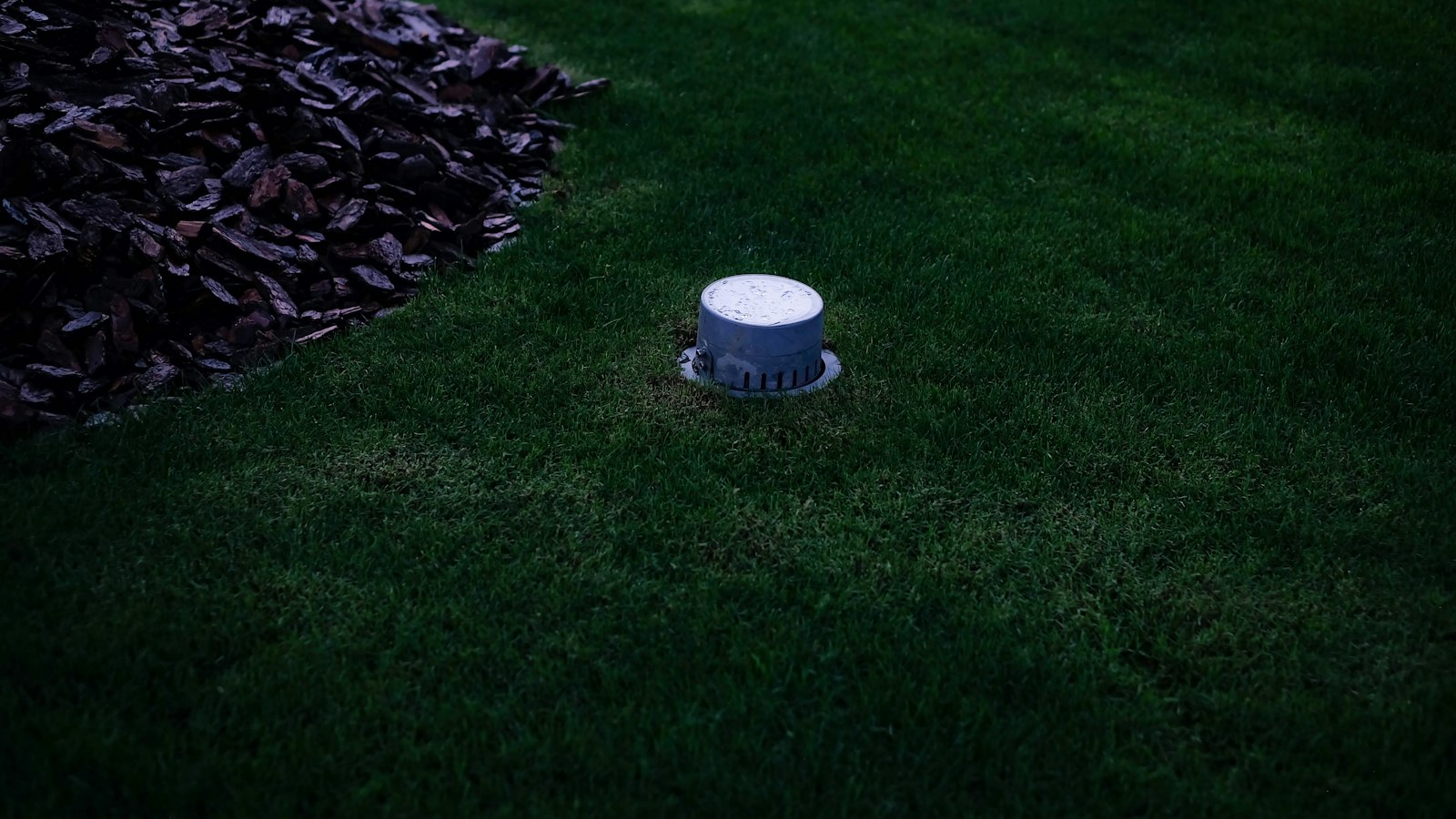
There is a particular moment on an estimate that tells me how long somebody has been fighting their mole. I walk the lawn, find the ridges, start pressing down runs to see which ones are live, and about forty feet in my boot hits a plastic stake with a little solar panel on top. Sometimes there are four of them spaced across the yard in a grid, exactly the way the box said. Sometimes there are nine.
And running right past one of them, close enough that I could touch both at the same time, is an active mole run with soft soil over it. That picture is the honest answer to this question, and I have seen it in yards across Greater Cincinnati more times than I can count. Here is what those spikes actually do in the ground, why the mole ignores them, and why the reviews still say they work.
Key takeaways
- Sonic and solar mole spikes do not reliably remove moles from a lawn. University extension programs have tested vibrating and ultrasonic devices for decades and consistently do not recommend them for mole control.
- The vibration from a battery or solar stake travels only a few feet through soil, and heavy Ohio Valley clay absorbs it faster than the loose loam the marketing photos are shot in.
- Moles habituate. A buzz that repeats every thirty seconds and never hurts anything becomes background noise within days, the same way you stop hearing a refrigerator.
- The reason the reviews are positive is timing. People buy a spike when damage peaks in spring or after a storm, and mole surface activity naturally drops off a few weeks later for reasons that have nothing to do with the stake.
- A mole leaves a lawn when it is removed from it. Trap Your Moles is A plus rated with the BBB and guarantees mole removal across Greater Cincinnati. Free phone estimate at 513-518-5639, no sales visit needed.
Do Sonic Mole Repellers Work?
No, not as a way to clear a lawn and keep it clear. A vibrating spike may move a mole a short distance for a few days, but it adjusts and returns to the food under your grass. Extension programs do not recommend them, and we routinely find active runs within a foot of an installed stake.
I want to be precise about what I am saying, because “it does nothing at all” is not quite right either, and a homeowner who feels a faint buzz in the stake can tell when they are being talked down to.
A vibrating spike does put energy into the soil. A mole can almost certainly detect it up close. What it does not do is make the mole leave, because leaving is not a small decision for that animal. Under your lawn is a tunnel network it spent weeks building and a standing population of earthworms it needs to eat every single day. Set that against a mild, repetitive, harmless buzz. The buzz loses.
Extension wildlife programs have looked at this class of device for a long time, going back well before the solar versions showed up, and the guidance has not moved. They do not recommend vibrating stakes, ultrasonic units, or windmill style noise makers for mole control. The reason is not that nobody has tried them. It is that people keep trying them and the moles keep tunneling.
What Does a Solar Spike Actually Do Underground?
It buzzes on a timer. Most units fire a vibration or a tone every twenty to forty seconds through a plastic stake pushed six to ten inches into the soil. The energy spreads out and fades within a few feet, so a single spike influences a small circle of ground and nothing beyond it.
Open one up and there is not much to it. A small solar cell charges a battery, the battery drives a tiny motor or buzzer, and a timer fires it every half minute or so. The stake carries that into the dirt.
The problem is what happens next. Vibration loses strength fast in soil, and it loses strength faster in dense, wet, heavy ground than in loose dry sand. Packaging that promises coverage of a large area is describing a straight line measurement in ideal conditions, not a real yard with a driveway, a foundation, tree roots, a buried downspout line, and forty years of settled clay in it.
So picture the realistic version. You have a circle of ground a few feet across where a mole might notice something. The rest of your lawn is unaffected. A mole run does not have to detour very far to be entirely outside that circle, and moles are not marching in a straight line toward the stake in the first place. They are following worms.
Why Doesn’t the Buzzing Drive the Mole Out?
Because it never turns into a consequence. Animals habituate to repeated stimuli that predict nothing, and a spike that buzzes every thirty seconds forever is the definition of predictable. Within a few days the mole treats it the way you treat traffic noise, and the food under your lawn has not changed at all.
This is the part worth understanding, because it explains every failed repellent and not just this one.
An animal reacts to something new. The first time a stake buzzes near a run, the mole may well avoid that stretch. But nothing follows the buzz. No predator arrives. It does not hurt. It happens again in thirty seconds, then again, identically, all day and all night. Nervous systems are built to filter exactly that kind of signal out, because an animal that cannot ignore harmless repetition cannot function.
Now add the other side of the equation. A mole has a metabolism that forces it to eat close to its own body weight in worms and soil insects every day. It cannot take a week off and go look for somewhere quieter. The lawn it is in is where the food is, and the tunnel system it is standing in cost it real effort to build.
So you have a mild annoyance on one side and survival on the other. That contest is not close, and it is the same reason castor oil for moles and the Juicy Fruit gum trick fall over. Every one of these remedies asks a hungry animal to abandon a working food supply because something mildly unpleasant is happening. It does not.
Can Moles Even Hear the Frequency?
Moles have no external ears and poor eyesight, and they navigate mostly by touch and by ground vibration. So a mole can sense a vibrating stake nearby. Sensing it and being driven off by it are different things, and the devices sold as ultrasonic are aimed at a sense moles barely use.
There is a real confusion in this product category that is worth separating out.
A mole is a vibration specialist. It lives in the dark, its eyes are tiny and often hidden under fur, and we covered how little it can actually see in are moles blind. It reads its world through its snout, its whiskers, and what it feels coming through the soil. A beetle moving in the dirt is information. So yes, a stake thumping away a couple of feet from a run is something the animal can perceive.
But notice what that means. The device is not sneaking up on a hidden weakness. It is broadcasting on a channel the mole uses constantly and is very good at sorting through. The mole spends its whole life distinguishing a worm from a footstep from a passing car. One more repetitive mechanical source is easy for it to categorize and set aside.
The units marketed specifically as ultrasonic are on even weaker ground. Airborne high frequency sound is largely irrelevant to an animal that is under the dirt with no ear flaps, and it does not travel through soil well anyway. We wrote about what moles do and do not respond to acoustically in do moles make noise.
Then Why Do So Many Reviews Say They Worked?
Timing. Homeowners buy a spike during a damage spike, and mole surface activity is naturally seasonal and weather driven. A few weeks later the ridges slow down on their own, the soil dries, or the mole shifts to deeper runs. The stake gets the credit for a change it did not cause.
I am not calling those reviewers liars. They watched their yard get better after installing something. That is a real observation. The conclusion drawn from it is the problem, and it is the single most useful thing in this whole article.
Think about when a person actually orders these. Nobody buys a mole spike on a quiet week. They buy it the morning they find eight new ridges, which is almost always in the spring push, or in the days after a heavy rain softens the soil and brings worms up. Those are the peaks. Activity at a peak has nowhere to go but down.
Three weeks later, a few things have happened that have nothing to do with the stake. The weather turned. July went dry and the clay went hard, so the worms went deeper and the mole followed them into deep runs where it makes no visible ridges. The animal finished exploring and settled into a patrol pattern on tunnels it already built, which produces far less new damage. Or it genuinely moved along on its own schedule, which moles occasionally do.
The lawn looks better. The stake is standing right there. The review gets written. We laid out the real activity calendar in when moles are most active, and once you see that pattern, the pile of five star reviews stops being mysterious.
The version of this I see most often is the call that comes in August or the following March. The spikes are still in the lawn. The homeowner tells me they worked last year and then stopped working. They did not stop working. The season came back around.
Does Cincinnati Clay Change the Math?
It makes a weak device weaker. Southwest Ohio and Northern Kentucky sit on dense clay, which absorbs vibration over a shorter distance than the loose soil these products are demonstrated in. It also drives moles into deeper runs in dry spells, well below the reach of a stake pushed a few inches down.
Our ground is not the sandy loam in the product photography. It is heavy, it packs tight, and in a dry August it turns to brick. Dense damp clay is good at swallowing mechanical energy over a short distance, so whatever modest circle of influence a spike has in ideal soil, assume less of it here.
Depth makes it worse. The shallow feeding runs that raise the ridges you see are only a few inches down, which is roughly where a stake sits. The deep runs are a different story, and we went through the numbers in how deep moles dig. When the surface bakes and the worms drop, the mole drops with them into travel tunnels that can sit a foot or two below grade. A stake buzzing in the top six inches is not part of that conversation.
There is a practical failure mode too, and it is unglamorous but real. These are cheap outdoor electronics sitting in an Ohio Valley yard. Solar panels get covered in grass clippings from the first mow. Batteries in the sealed units give out. Water finds its way into the housing over a winter. On plenty of yards I have walked, the spikes stopped running months before the homeowner noticed, and there was no way to tell from the surface.
What Actually Moves a Mole Out of the Lawn?
Removing the animal. Trapping in confirmed active runs, set at the correct depth in the straight travel sections, is the method that ends the damage instead of relocating it for a few days. Everything else manages a symptom while the mole is still under the grass.
Once you accept that the mole is in your yard for the food and not for the ambience, the whole category of repellents falls into place. You cannot talk an animal out of a food supply. You can only take the animal out.
That work is less about product and more about reading the yard. Most of the ridges in a lawn are not equally useful. Some are main travel corridors the mole runs several times a day, usually the long straight ones following a fence line, a driveway edge, or the border of a bed. Others are one time exploratory pushes it made, found nothing in, and never returned to. From the surface on a Saturday morning they look identical.
The test is free and it is the one piece of homework worth doing before anybody comes out. Press down a section of every raised ridge with your foot and mark where you did it. Check those spots in twenty four hours. The ones pushed back up are live, and that map is the difference between a trap that catches an animal and a trap sitting in a dead tunnel. That, in one paragraph, is why DIY mole removal usually does not work: not because the homeowner bought the wrong gadget, but because the set went into the wrong tunnel.
The full method is written up in our guide to ground mole trapping, and it is what our mole removal service is built on. Read the yard, confirm which runs are active, remove the mole, then come back and verify the ridges stay flat. That last step is the whole ballgame, because a flat lawn a week later is the only proof any of this worked.
One honest note before you spend anything. If the tunneling is out in a back acre you never look at and nothing is crossing your maintained turf, a mole out there is doing more good than harm and is not worth money to remove. The time to call is when runs are crossing the lawn you actually care about, heaving turf along a foundation line, or undercutting beds and new sod.
If that is your yard right now, you do not need another stake in it. We are A plus rated with the BBB and we work lawns all season from Cincinnati out through Florence and across the tri state. Call 513-518-5639 for a free phone estimate with no sales visit needed, or reach us here, and pull the spikes out of the grass before you mow.
Common Questions
Do solar mole repellent stakes really work?
Not as a reliable way to clear a lawn. Solar stakes put a small vibration into the soil every twenty to forty seconds, and a mole can sense it up close, but the effect fades within a few feet and the animal habituates to it in days. Extension wildlife programs do not recommend vibrating or ultrasonic devices for mole control, and in the field we regularly find active runs within a foot of an installed stake.
How many sonic spikes do I need to cover my yard?
There is no number that solves it, which is the honest answer. Adding more stakes extends the same weak effect over more ground rather than making it stronger, and the mole is not leaving its food supply either way. Homeowners who install a grid of eight or nine usually call us in the same season, with the spikes still in the lawn.
Can ultrasonic sound get rid of moles?
Airborne ultrasonic sound is a poor match for a mole. Moles have no external ears, live underground, and navigate mainly by touch and ground vibration, and high frequency sound does not travel well through soil. Devices that advertise ultrasonic operation are aimed at a sense the animal barely uses in the place it actually lives.
Do mole repellers work on voles, chipmunks or gophers too?
The same problems apply. Every one of those animals is in your yard for food and shelter, and none of them will abandon a working food supply over a repetitive harmless buzz. If you are not certain which animal you have, that matters more than the device, because the damage patterns and the removal methods are genuinely different for each one.
What should I do with the spikes already in my lawn?
Pull them before you mow, since a forgotten stake is hard on a mower blade and the solar panels get buried under clippings anyway. Then run the flattening test on every ridge in the yard and note which ones come back up in twenty four hours. That map is what a trapper needs, and it is worth far more than the stakes were.
Photo by Vanessa Zhu on Unsplash