The question usually arrives with a story attached. Somebody had a squirrel in the attic two autumns ago, paid to have it dealt with, and now there is scratching over the bedroom again. They want to know whether it is the same animal, and underneath that they want to know how long this is going to go on. So they look up how long squirrels live, hoping the answer is short.
It is short, and it does not help the way people expect. The honest answer is that most squirrels born in a Cincinnati yard do not survive their first year, and the ones that do can keep going for the better part of a decade. Neither half of that sentence solves an attic problem, because the thing that keeps bringing squirrels back to a house is not any individual animal’s age. It is the hole.
Key takeaways
- Eastern gray squirrels have been recorded living up to about 12.5 years in the wild, and a captive female passed 20 years, but those are the outliers rather than the normal life.
- Most squirrels die before they reach adulthood. Published figures for the fox squirrel put the average wild lifespan at roughly 7 months for that reason, which is the number that actually describes the population.
- A female gray squirrel usually begins breeding at around 15 months and can produce two litters a year for more than 8 years, so a neighbourhood replaces its losses fast.
- Squirrels living in an attic often last longer than their wild counterparts, because a dry insulated space removes weather and most predators from the equation.
- Removing one animal does not end the problem. An open soffit, a chewed gable vent or a gap at a roofline is found again by a different squirrel, which is why the sealing work matters more than the catch.
How Long Do Squirrels Live?
Eastern gray squirrels have been recorded at up to 12.5 years in the wild, and fox squirrels have reached 18 years in captivity. Those are maximums. Most squirrels die before adulthood, and published averages for wild populations fall under a year, so a typical squirrel lives a very short life while a lucky one lives a long one.
Two species account for nearly every squirrel call we take across Greater Cincinnati, Dayton and Northern Kentucky. The eastern gray is the one most people picture, grizzled gray with a pale halo around the tail. The fox squirrel is the bigger, rustier one, more common where yards back onto open woodlot edges. Their lifespans work out about the same, and the published numbers for both tell the same story twice.
For the eastern gray, the documented maximum in the wild is about 12.5 years, and a female in captivity lived past 20. For the fox squirrel, captivity has produced animals of 18 years, while the figure recorded for average wild lifespan is closer to 7 months. That gap between 7 months and 18 years is not a contradiction or a measurement error. It is what an average looks like when most of the population dies very young and a small number of survivors live a long time.
So when somebody asks how long a squirrel lives, there are really two true answers. Pick one animal at random in your yard in July and the honest bet is that it will not see next summer. Pick the one that has already made it through a winter and raised a litter, and you may be looking at an animal that outlasts your roof shingles.
Why Do So Many Squirrels Die in Their First Year?
Juvenile squirrels face predators, traffic, disease, parasites and winter food shortages all at once, with no stored experience of any of it. Newly independent animals also have to find their own den space in territory that is already occupied, and the weakest of a litter often do not survive their first cold stretch.
A squirrel leaves the nest at around ten weeks and is roughly adult sized by nine months, which sounds like a fast, safe start. It is not. The first independent autumn is the filter. A young squirrel has to learn what is food and what is not, cache enough of it to matter, avoid hawks and owls and road traffic, and secure somewhere dry to sleep through January, all in a few months, in territory that older animals already hold.
You can see the result in yards here every spring. In March and April the local population looks enormous. By the following March a lot of those animals are simply gone, and the ones left are bigger, warier and harder to fool. The trappers who have worked an area for years notice it in a practical way: the squirrel that keeps beating a poorly set trap is almost never a young one.
This is also where the health picture sits. The parasites a squirrel carries, the fleas, ticks and mites, hit juveniles hardest, and a litter raised in a damp nest can be wiped out by something a healthy adult shrugs off. None of this is comfortable reading, but it explains why the animals that make it into your attic are often the strongest of their cohort rather than the weakest.
How Long Do Squirrels Live in an Attic?
Longer than they would outside, in most cases. An attic removes weather, most predators and the pressure to find a dry den, which are three of the biggest things that kill wild squirrels. An animal that gets into a warm insulated space in its first autumn has a far better chance of seeing several more.
This is the part homeowners rarely expect, and it changes how you should think about the problem. Your attic is, from a squirrel’s point of view, the best real estate for a mile. It is dry, it holds heat, a hawk cannot reach into it, and the insulation is better nesting material than anything in the woods. An animal that finds its way in has solved the single hardest problem of its life.
That is why attic squirrels so often turn into attic generations. A female who dens successfully in a roof space has every reason to come back to it, and her young grow up treating that structure as normal. We have opened up soffit cavities in houses around Cincinnati where the nesting material was clearly years deep, built in layers, with the oldest of it matted flat and dark.
It also means the damage keeps compounding. Teeth that never stop growing have to be worn down on something, and in an attic that something is often a joist edge, a vent frame or wiring insulation. A short occupancy is a cleanup. A long one is a repair bill, which is the honest reason we push people to deal with daytime scratching sooner rather than waiting to see if it stops. If you are hearing it overhead right now, the detail of what that sounds like and what it means is in our piece on squirrels in the attic and why they keep coming back.
How Long Can a Squirrel Live Trapped in a Wall?
Not long, and this is the one situation where waiting is the wrong call. A squirrel that has fallen into a wall cavity cannot climb smooth drywall or sheathing and has no water. We do not publish a stopwatch figure, because it varies with the animal and the weather, but an animal in that position is in serious trouble within days.
This situation comes up more than people think, usually after somebody seals an opening without checking what is behind it. The animal drops down between the studs, cannot get purchase on the inside face, and is stuck at the bottom of a cavity with no way up.
The sound tells you quickly. Scratching that stays in one spot at roughly waist or knee height, rather than moving around overhead, is the signature. It often gets frantic for a day or two and then goes quiet, and the quiet is not good news. A dead animal inside a wall becomes an odour problem, a fly problem, and eventually a cut-and-repair job rather than a removal.
If you are hearing that now, do not seal anything else and do not wait to see if it works itself out. Our full write up on getting a squirrel out of a wall covers what we actually do, which usually means locating the animal by sound, making a controlled opening in the right bay, and closing it back up properly. And if an animal is already sitting in a trap you set yourself, do not open it: see trapped animal removal and call us.
Do Squirrels Live Longer in Captivity?
Yes, by a wide margin. Captive eastern gray squirrels have passed 20 years and fox squirrels have reached 18, against wild maximums of roughly 12.5 years and wild averages well under a year. Steady food, veterinary care and no predators account for nearly all of that difference.
The captive figures are worth knowing because they settle an argument people have with themselves. When somebody finds a squirrel that has clearly been around their property for several seasons, they sometimes assume it must be unusually old or unusually clever. It probably is not. It has simply been living somewhere that shields it from the things that kill squirrels, and your house may be doing exactly the job a cage does.
That is the practical lesson hiding in the captivity numbers, and it is the reason this post exists rather than being a trivia page. The upper limit of a squirrel’s life is set by its biology. Where any individual lands inside that range is set almost entirely by its shelter. Make a structure easy to live in and you have extended the lifespan of whatever moves into it.
We should be clear about one thing we do not do. Keeping a wild squirrel is not legal or sensible, and nothing here is a suggestion to try. The captivity data comes from zoological and research records, and it is useful to us only as a measure of what shelter is worth.
How Many Litters Do Squirrels Have in a Year?
Two, in most years. Eastern gray squirrels breed in roughly December to February and again in May to June, with a gestation of about 44 days. Females usually start breeding at around 15 months and can produce two litters a year for more than 8 years, which is how a local population replaces heavy losses so quickly.
The breeding calendar is the number that actually matters for a homeowner, more than any lifespan figure. Two litters a year, over an eight year breeding life, from a species where most young die early, adds up to a population that is constantly being refilled from underneath.
Here is what that looks like on a street in Northern Kentucky. The animal you removed in September is gone and is not coming back. But the yard it lived in is the same yard, the oak is still dropping acorns, and by late winter there are young squirrels dispersing from two or three nearby nests looking for the exact thing your attic offers. They are not the same animal. They are the next cohort, and they will find the same opening because the opening is what made your house attractive in the first place.
The late winter litter is why we get a spike of calls in February and March, and the summer litter is why we get a second one in July and August. If you have heard activity overhead at either of those times of year, that timing is itself a clue, and it is one of the signs worth reading alongside droppings and chew marks. What those look like is covered in our guide to what squirrel droppings look like.
Why Does Removing One Squirrel Not Fix the Problem?
Because the entry point outlives the animal. A squirrel may live one year or ten, but a chewed soffit corner, a torn gable vent screen or a gap where two roof planes meet stays open indefinitely, and a different squirrel finds it within a season. Removal without sealing buys you months, not a solution.
This is the whole argument of this post, and it is why we would rather answer a lifespan question honestly than sell you a one-time catch. People think in terms of the animal. Structures do not work that way. An opening that let a squirrel in two years ago is still an opening, scented by the animals that used it, and visible to every dispersing juvenile that runs your roofline in February.
So when somebody tells us the squirrel came back, we almost never think it is the same squirrel. We think the hole came back, which is to say it never left. That is the question we ask first on the phone: not how long has it been there, but was anything ever closed up, and who closed it.
It is also why we are blunt with people about half measures. Chasing an animal out with noise or light, or catching it and leaving the roofline as it was, is work that undoes itself on a schedule set by the local breeding calendar rather than by anything you did. The signs you need squirrel trapping services piece covers how to tell a passing visitor from a resident before you spend money either way. The same logic applies underground with a different animal, which is the point we make about mole lifespans in how long moles live.
What Does Professional Squirrel Removal Actually Involve?
An inspection of the full roofline and attic to find every opening, then mechanical removal using one way doors and live cage traps, then sealing each entry with material a squirrel cannot chew through. Cleanup and soiled insulation come last, after the structure is confirmed empty. No poisons are used at any stage.
Somebody comes out and walks the roofline, the soffits, the vents, the roof returns and the attic itself, then tells you plainly what you have and where it got in. Finding every opening is the part that decides whether the job holds. Miss one and you have paid for a pause.
The removal itself is mechanical. One way doors let an animal leave and stop it getting back in, and live cage traps handle the rest. No poisons and no chemicals go into your house, which is why this work is safe around kids and pets. In Northern Kentucky we hold the Kentucky license for squirrel work, so trapping there is done in line with Kentucky wildlife regulations.
Then the openings get closed with material that does not yield to teeth, and we tell you straight if there is soiled insulation or chewed wiring somebody needs to look at. We are licensed and insured, and satisfaction guaranteed means what it sounds like. We do what it takes to get it right.
If you are hearing something overhead and want to know what you are dealing with, call and describe it: what time of day you hear it, whether it moves around or stays in one spot, and whether you have seen anything running the roofline. That is usually enough for us to tell you over the phone. We cover Cincinnati, Dayton and Northern Kentucky, the number is 513-518-5639, the office is open Monday through Friday from 8 AM to 6 PM, and the estimate costs nothing. You can also reach us through the contact page. Full detail on the service is on our squirrel removal page.
Common Questions
What is the average lifespan of a squirrel?
Much shorter than most people assume, because the average is dragged down by heavy juvenile mortality. Published figures for the fox squirrel put average wild lifespan at roughly 7 months, since most squirrels die before reaching adulthood. The animals that survive that first year do far better, and eastern gray squirrels have been recorded at up to about 12.5 years in the wild. Both numbers are true at once, which is why a single average is a poor description of this species.
What is the oldest squirrel ever recorded?
In the wild, eastern gray squirrels have been documented at about 12.5 years. In captivity the records go considerably higher, with a female eastern gray passing 20 years and fox squirrels reaching 18. Captive animals have steady food, no predators and veterinary care, which removes almost everything that kills a wild squirrel, so captive records tell you about the limits of the biology rather than about life in your yard.
How long do squirrels live in an attic?
Usually longer than they would outdoors. An attic is dry, warm, out of reach of hawks and owls, and full of nesting material, which removes three of the main causes of death for a wild squirrel. That is why attic squirrels frequently turn into multi season residents and why nesting material in a long occupied roof space is often built up in layers. It is also why the damage to joists, vent frames and wiring compounds the longer the animal stays.
How long can a squirrel survive trapped in a wall?
Not long, and it should be treated as urgent. An animal that drops into a wall cavity cannot climb the smooth inner face and has no access to water, so it is in serious trouble within days rather than weeks. The usual sign is scratching that stays in one spot at waist or knee height instead of moving overhead, often frantic for a day or two before going quiet. Do not seal anything further and do not wait, because a dead animal inside a wall becomes an odour and repair problem.
How many babies do squirrels have?
Eastern gray squirrels typically raise two litters a year, after breeding seasons that run roughly December to February and again May to June, with a gestation of about 44 days. Young are weaned between about seven and ten weeks and reach adult size around nine months. A female usually starts breeding at around 15 months and can continue producing two litters a year for more than eight years, which is how a local population recovers quickly from heavy losses.
If I remove a squirrel, will another one come back?
Yes, if the way in is still open. The entry point outlasts any individual animal, and dispersing young squirrels run rooflines looking for exactly the kind of dry sheltered space your attic offers, particularly in late winter and again in midsummer when litters become independent. That is why removal on its own buys months rather than solving anything, and why sealing every opening with material a squirrel cannot chew is the part of the job that actually decides the outcome.
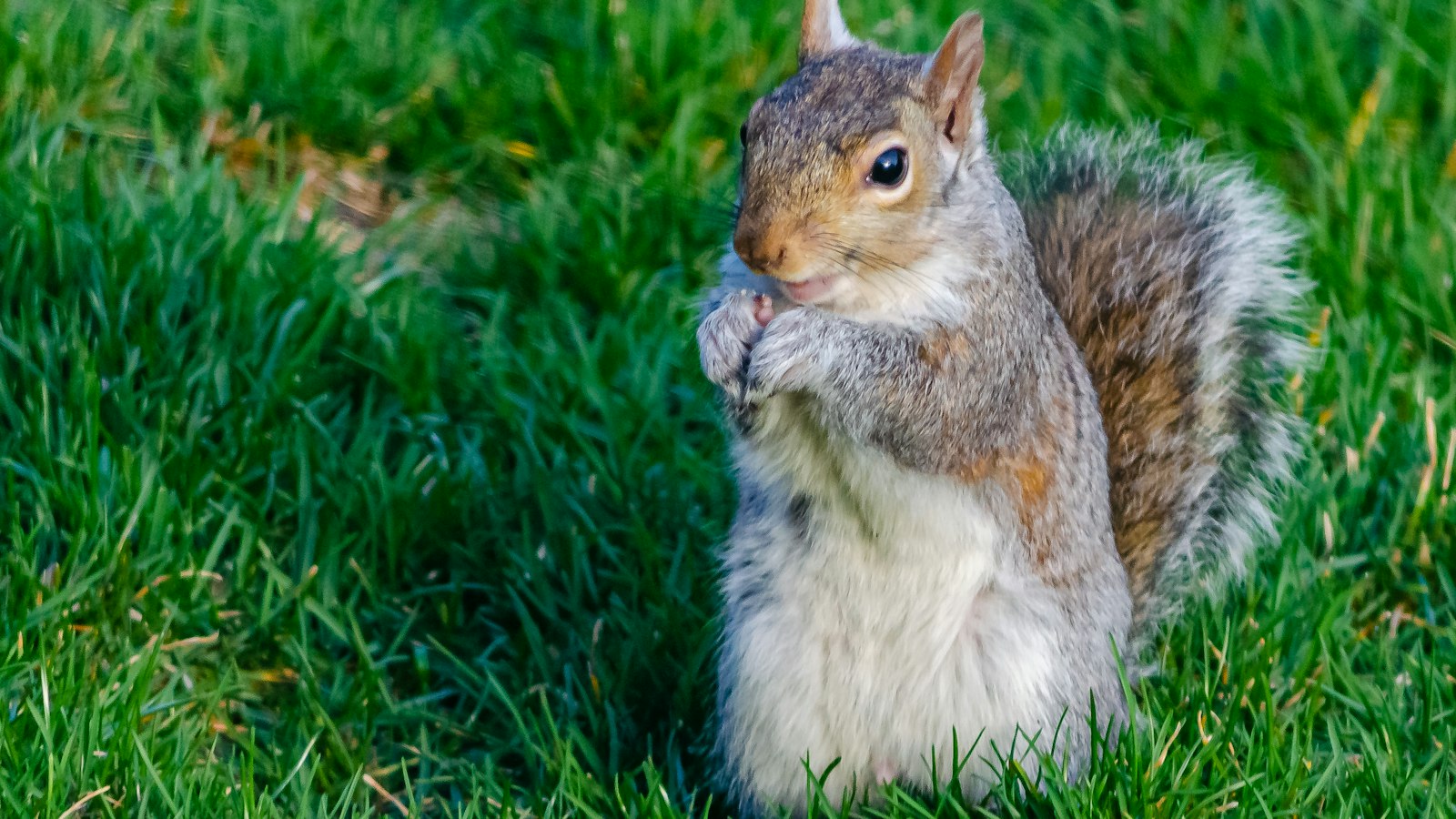
Photo by Steve Adams on Unsplash