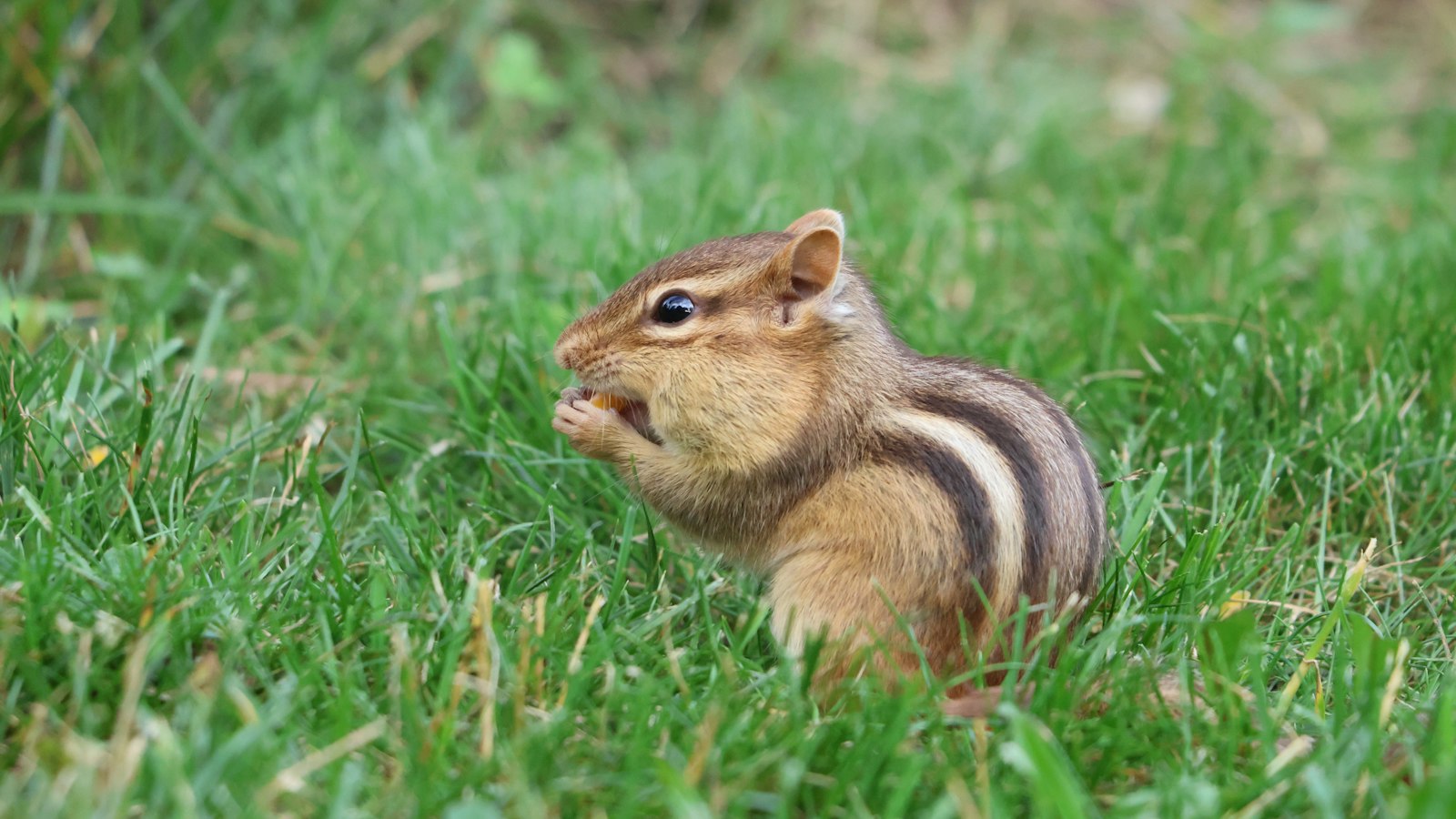
Most people do not call us about a chipmunk. They call us about a hole. Somebody was pulling weeds along the front walk, or edging the bed by the porch, and there it was: a clean round opening in the dirt with nothing piled around it, going straight down into the dark. Then they found a second one by the retaining wall, and a third under the shrubs, and that is usually the point where the phone rings.
The good news is that a hole in a yard is readable. The animal that dug it leaves a signature, and the signature is mostly in what is sitting next to the opening. A chipmunk leaves almost nothing. That one detail separates it from nearly everything else that digs in an Ohio Valley yard, and once you know it you can stand over a hole and name the animal in about five seconds.
Key takeaways
- A chipmunk hole is a clean round opening about 2 to 3 inches across, roughly the width of a golf ball, with no mound of loose dirt beside it.
- The missing dirt pile is the tell. Chipmunks haul excavated soil away in their cheek pouches and scatter it, so the entrance stays bare and hidden.
- A fan of dirt spilled out beside a much bigger hole is a groundhog. A cone of soil with no opening at all is a mole. Worn surface runways with quarter sized holes along them are voles.
- Chipmunk tunnels run 10 to 30 feet and reach about 3 feet deep, and they favor the edge of something solid: a foundation, a patio, a walk, a retaining wall.
- Trapping is mechanical, with no poisons and no chemicals, so the yard stays safe for kids and pets while the work gets done.
What Do Chipmunk Holes Look Like?
A chipmunk hole is a clean, round opening about 2 to 3 inches in diameter, cut straight into the soil with no mound of dirt around it. The edges look neat rather than torn, there is no collar of spoil, and the hole often sits tight against a foundation, walk, patio edge, stump or rock.
Picture the width of a golf ball. That is the size you are looking for, and it stays remarkably consistent, because the animal using it is a consistent size and it does not want the entrance any wider than it has to be.
The second thing to notice is the edge. A chipmunk entrance is cut, not scraped. It looks almost drilled. There is no apron of crumbs, no torn turf, no scattering of pebbles and root ends fanned out downhill the way a larger digger leaves things. Run your eye around the rim and the grass usually comes right up to it.
The third thing is placement, and this is the one most homeowners already noticed without realizing it mattered. Chipmunk holes are almost never out in the open middle of a lawn. They sit against something: the foundation line, the edge of the patio, under the bottom step, beside a stump, in the gap behind a retaining wall, at the base of a shrub. That is not an accident, and we come back to why below.
Why Is There No Dirt Pile Around a Chipmunk Hole?
Because the chipmunk carries the soil away instead of pushing it out. It packs loose dirt into its cheek pouches, walks it off, and scatters it somewhere else in the yard. The result is an entrance with no spoil heap, which is the single most reliable way to tell a chipmunk hole from a groundhog or mole.
This is the detail that makes the whole diagnosis work, and it is genuinely clever animal behavior rather than a piece of trivia.
A groundhog digs the way you would dig. It shovels the dirt backward out of the hole, and it piles up right there, which is why a groundhog burrow announces itself with a wide fan of fresh soil you can see from across the yard. A mole does something similar from below, shoving spoil up through a vertical shaft until it forms the cone we all recognize.
A chipmunk refuses to do that, because a pile of fresh dirt is a sign that says “something lives here” to every hawk, fox and neighborhood cat in the area. So it loads the loose soil into its cheek pouches, the same pouches it uses to move seed, carries it off, and dumps it somewhere unremarkable. The entrance stays bare, flush and easy to miss.
It also means you cannot judge how much digging has happened by what you can see. The dirt went somewhere. It just did not go next to the door.
How Does a Chipmunk Hole Compare to a Mole, Vole or Groundhog Hole?
Chipmunk: 2 to 3 inches, clean, no dirt pile. Groundhog: 10 to 12 inches with a large fan of excavated soil beside it. Mole: a cone shaped mound of soil with no visible opening at all, plus raised surface ridges. Vole: worn runways one to two inches wide with quarter sized holes opening off them.
Set them side by side and they stop looking alike.
Groundhog. Much bigger, usually 10 to 12 inches across, and the giveaway is the spoil. There will be a broad fan of loose dirt spilled out beside the opening, often with a worn path leading away from it. Groundhogs like the same structural edges chipmunks like, which is why people mix them up at first glance, but the size and the dirt pile settle it immediately. If that is what you are looking at, our groundhog removal page covers how those burrows get handled, and we wrote a full breakdown of reading groundhog holes in a yard.
Mole. The opposite problem. A molehill is a cone of pushed up soil with no opening you can find, because the mole backfills the shaft behind it. Alongside the mounds you get raised seams running across the lawn that give underfoot when you step on them. A mole is hunting earthworms and grubs through the top few inches of soil, so the damage is a surface ridge rather than a doorway. If that sounds like your yard, start with mole removal.
Vole. Smaller and much more visible as a pattern. Voles cut winding runways one to two inches wide through the turf, clipped down to the soil, and you find small clean holes roughly the width of a quarter opening off those trails. No mound anywhere, which is the trait that trips people into guessing chipmunk. The difference is the runway. A chipmunk does not leave a visible road on the surface. We cover the full picture in vole damage in a lawn and on the vole removal page.
Rats and mice. Smaller holes, usually an inch to an inch and a half, tucked hard against a structure, and typically with droppings, greasy rub marks or a strong smell nearby. Clean dirt and no sign is not a rat burrow.
If you are standing in the yard and still cannot call it, we walk through the whole comparison in groundhog or mole digging in a Cincinnati yard, which is the post people send to their neighbors.
Where Do Chipmunks Dig in a Yard?
Against something solid. Chipmunks burrow along foundations, under patios, walks, steps and decks, behind retaining walls, at the base of shrubs and stumps, and under woodpiles. They want a hard surface over the tunnel and cover at the entrance, so open lawn is the last place you will find them.
A chipmunk is prey for almost everything, and it builds accordingly. An open hole in the middle of a lawn is a death sentence. A hole six inches from the foundation, half under a hosta, with a concrete walk forming the ceiling of the first three feet of tunnel, is a fortress.
In Greater Cincinnati the usual suspects are consistent enough that we can almost guess them over the phone. The gap where the patio meets the lawn. The corner where the front walk butts up against the porch. Behind stone and block retaining walls, which are the single most popular chipmunk address in Northern Kentucky because the wall gives them a hollow, drained, rock covered void to work behind. Under the bottom step of a deck.
Our clay soil plays into it as well. Ohio Valley clay holds a tunnel open without collapsing, so a burrow a chipmunk dug three years ago is often still perfectly serviceable, which is part of why a yard that has had them tends to keep having them.
That same preference is also exactly how they end up inside. Once the tunnel is already running along the foundation, the distance from “outside” to “under the crawl space” is very short. We walk through that whole route in how chipmunks get into a house.
How Deep and How Long Are Chipmunk Tunnels?
A chipmunk burrow system typically runs 10 to 30 feet in total length and reaches about 3 feet below the surface. It is not a single straight tube. It branches into nesting chambers, food storage chambers and dead end escape shafts, with more than one entrance to the surface.
The scale surprises people. From the surface you are looking at an opening the size of a golf ball, and underneath it there is a system longer than most living rooms.
It is also organized. There is a nesting chamber, usually the deepest point and lined with leaves and grass. There are separate storage chambers for the seed, nuts and grain they cache through the fall. There are side shafts that go nowhere, which exist purely as an exit when something comes down the main tunnel.
That three foot depth matters for two practical reasons. It is below the frost line here, which is how they ride out an Ohio Valley winter. And it is deep enough to sit under the bedding gravel of a patio or a walk, which is where the structural trouble starts.
Can Chipmunk Burrows Damage a Patio, Walk or Foundation?
Yes. Tunneling under a slab, walk, step or retaining wall removes the compacted base the structure sits on. Over a season or two the surface settles, cracks, or in the case of a retaining wall begins to bulge, and water then follows the void. It is slow damage, which is exactly why it gets ignored until it is expensive.
This is the part of the conversation where people stop thinking of chipmunks as cute.
A patio slab or a paver walk is only as stable as the compacted base underneath it. Run a network of three inch tunnels through that base, let a couple of winters freeze and thaw, and the surface drops. You see it as one corner of the patio sitting lower than it used to, a step that rocks, or a crack that appeared along a line nobody can explain.
Retaining walls are worse, because a wall is already fighting the soil behind it. Hollow out that backfill and the wall starts to lean. We have seen block walls in hillside yards around Cincinnati pushed visibly out of line, and when they came apart the voids behind them were obvious.
Water is the multiplier. A tunnel running along a foundation routes roof runoff down beside the footing instead of away from it. On its own a chipmunk burrow will not sink a house. Combined with grade, gutters and a few years, it absolutely contributes.
None of this is a reason to panic over one hole by the shed. It is a reason not to leave twelve of them under the patio for three years.
How Many Chipmunks Do a Lot of Holes Mean?
Fewer than you think, but rarely one. Each animal maintains a burrow with a main entrance plus secondary escape holes, so a single chipmunk can easily account for three or four openings. A yard with holes in several separate areas, though, is usually holding several animals.
The honest answer is that hole count is a poor headcount, and anyone who gives you a confident number from a photo is guessing. A single burrow system normally has a main entrance plus one or more escape holes, so four openings does not mean four animals.
What we actually read is grouping. Three or four holes clustered within a few feet of each other along the patio edge is very likely one animal’s system. Three holes by the patio, four behind the retaining wall and two at the far corner of the house is three separate systems, and that is a different job.
Season matters too. Right now, heading into winter, they are below ground far more of the day, so activity looks lighter than it is. They do not truly hibernate. They drop into a deep sleep and wake periodically to eat from those storage chambers, which means the burrow stays occupied all season. The two times of year you really see them are spring, when the young disperse, and late August through October while they are caching.
That is also why a yard that gets handled in the fall tends to stay quiet. If you want the broader picture of what else they tear up while they are here, we covered it in signs of chipmunk damage.
What Should You Do About Chipmunk Holes in Your Yard?
Confirm the animal from the hole size and the absence of a dirt pile, note where the holes sit relative to hard surfaces, and get the burrow systems trapped out before they spread under a slab or a wall. Filling the holes alone does not work, because the animal simply reopens them or digs around the fill.
Start with the identification, because every sensible next step depends on it. Walk the perimeter of the house, the patio edges, the walls and the bed lines. Measure one opening with your fingers. Look for spoil. Note which holes sit under or against something structural, because those are the ones that matter most.
What we would ask you not to do is pour something down them. Yard poisons, repellent granules, smoke bombs and the various internet remedies do not resolve a burrow system, and some of them put product into soil where your kids and your dog are. A sealed hole gets reopened in a day or two, usually a foot to the side, and now you have lost track of where the real entrances are.
Trapping is what ends it, because it deals with the animals actually using the tunnels. It is mechanical, with no poisons and no chemicals involved, so the yard stays safe for kids and pets while we work. We set to the system, not to the yard at large, which is why identifying the active entrances correctly is worth the ten minutes it takes.
Trap Your Moles is licensed and insured, and we handle chipmunk removal across Greater Cincinnati, including Cincinnati and the Northern Kentucky communities where those block retaining walls keep us busy. Satisfaction guaranteed.
If you have holes and you are not certain what dug them, call (513) 518-5639 and describe what you are looking at. We are in Monday through Friday, 8 AM to 6 PM Eastern. You can get a free estimate by phone, with no sales visit needed, and most of the time we can tell you what you have from the size of the hole and whether there is dirt sitting next to it.
Common Questions
How big is a chipmunk hole?
About 2 to 3 inches across, roughly the width of a golf ball, clean and round with no mound of loose dirt beside it. The size stays fairly consistent because the animal keeps the entrance only as wide as it needs. A much larger hole with a fan of soil next to it is a groundhog, and a cone of soil with no opening at all is a mole.
Do chipmunk holes have dirt piles around them?
No, and that is the most reliable way to identify one. Chipmunks pack excavated soil into their cheek pouches, carry it away from the burrow and scatter it elsewhere, which keeps the entrance bare and hidden from predators. If there is a spoil heap beside the opening, you are looking at a different animal.
How deep do chipmunks dig?
About 3 feet down, with a total burrow system running 10 to 30 feet in length. It branches into a nesting chamber, separate chambers for stored food, and dead end escape shafts. Three feet puts the nest below our frost line, which is how they get through an Ohio Valley winter underground.
Will filling in a chipmunk hole get rid of them?
No. A chipmunk will reopen a filled entrance or simply dig a new one a foot away, and the burrow system underneath is untouched either way. Filling holes also destroys the information you need, because you can no longer tell which entrances are active. Deal with the animals using the tunnels first.
Are chipmunk holes dangerous to a patio or retaining wall?
They can be, over time. The tunnels remove the compacted base that a slab, walk, step or wall depends on, and after a few freeze and thaw cycles the surface settles or cracks and a retaining wall can start to bulge. Water then follows the void. One hole by the shed is not an emergency. A network under the patio is worth handling.
When are chipmunks most active around Cincinnati yards?
Two peaks. Spring, when the young disperse and claim new territory, and late August through October while they are caching food for winter. They do not truly hibernate, so the burrow stays occupied through the cold months and they wake periodically to eat from their stores and come out on mild days.
Photo by Jordan Heinz on Unsplash