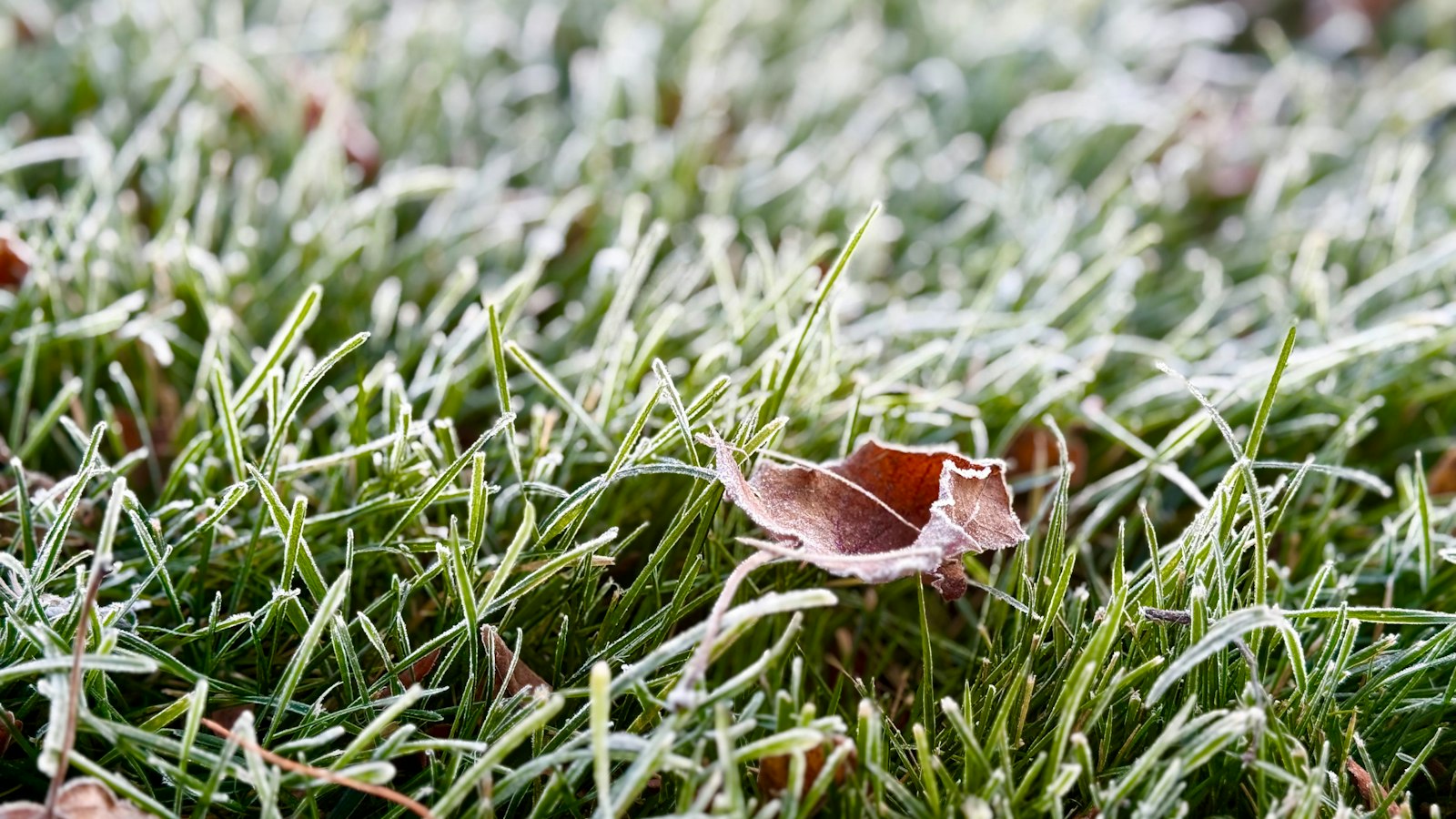
The call usually comes after the first hard mow of late fall, or after a frost knocks the grass flat. Somebody walks out to pick up leaves, looks down, and the lawn is full of little holes it did not have in August. Not one hole. Twenty of them, scattered along the front bed and out into the turf, each about the size of a nickel or a quarter, punched straight down into the ground.
A hole that small is easy to talk yourself out of. It is also the most readable sign in a yard, because the animal that made it leaves a specific set of clues around the opening, and the clues are mostly about what is not there. No pile of soil. No torn turf. No cone of dirt. Once you know what belongs next to a hole and what does not, you can stand over one and name the animal before you finish your coffee.
Key takeaways
- A vole hole is a clean opening roughly the width of a quarter, about 1 to 1.5 inches across, punched straight down with no mound of loose soil beside it.
- The hole almost never stands alone. It opens off a worn surface runway, a path about 1 to 2 inches wide with the grass clipped down to the dirt, and the runway is the part that confirms the animal.
- No spoil pile is the fast test. Moles push soil up into cones and ridges, groundhogs shovel a fan of dirt out behind them, and chipmunks carry theirs off in cheek pouches and leave a bigger 2 to 3 inch opening.
- Holes concentrate where the yard offers cover: bed edges, foundation plantings, under ground cover and mulch, along walks, and at the base of young trees where bark gets chewed in winter.
- Filling the holes does nothing on its own. Trapping is mechanical, with no poisons and no chemicals, so the yard stays safe for kids and pets while the work gets done.
What Do Vole Holes Look Like?
A vole hole is a small round opening about the width of a quarter, roughly 1 to 1.5 inches across, cut cleanly into the turf and dropping straight down. There is no cone or collar of loose soil around the rim, and the hole usually sits on or beside a worn path in the grass.
Hold a quarter in your hand and look at it. That is the size you are checking for, and it is small enough that most people walk over these for weeks before they register.
The rim is the next thing. A vole entrance looks cut rather than scraped. The grass comes right up to the edge and then stops, and the opening goes down at a steep angle rather than sloping in. There is no apron of crumbs fanned out on the downhill side, no torn sod, no scattering of root ends and pebbles.
Then look at what the hole is attached to, because this is the detail that keeps getting left out. A vole hole is almost never a standalone feature. It is a doorway off a travel route. Step back and look for a path: a winding line about 1 to 2 inches wide where the grass has been clipped short or worn down to bare dirt, running along a bed edge, around a shrub, under a low branch, and looping back on itself. Find the path and the holes along it, and you are finished diagnosing. A hole with a runway is a vole. Everything else in an Ohio Valley yard either leaves a pile or leaves a bigger opening.
Why Is There No Dirt Pile Around a Vole Hole?
Because a vole is not excavating much. It lives and travels on the surface under cover of grass and mulch, and its holes are shallow entry points into short tunnels near the root line rather than deep burrow shafts. There is very little spoil to push out, so none piles up at the opening.
This is where a vole differs from everything else people confuse it with, and the difference is behavioral rather than cosmetic.
A mole is an underground animal. It is pushing through soil all day, and the soil has to go somewhere, so it gets shoved up into the cones and the raised spongy ridges that everybody recognizes. A groundhog digs a serious burrow and throws the dirt backward out the door, which is why a groundhog hole announces itself with a wide fan of fresh soil you can see from the driveway. A chipmunk digs deep too, but it hauls the dirt away in its cheek pouches and scatters it, which is why its hole looks bare.
A vole does something simpler. It is a surface animal that spends its life in the thatch layer and under whatever cover the yard gives it, and its tunnels are shallow runs just below the crown of the grass, often only a couple of inches down. There is barely any spoil generated in the first place. The entrance is punched, not dug out.
Two voles turn up in yards around here, and they behave a little differently. The meadow vole is the surface traveler that wears the runways and leaves the classic quarter sized holes along them. The pine vole, sometimes called the woodland vole, works lower down and spends more of its time under mulch and leaf litter in beds, which is why its damage shows up as dying perennials and hollowed bulbs before you ever notice an opening in the lawn.
How Big Is a Vole Hole?
About 1 to 1.5 inches across, the width of a quarter. Sizes larger than that are usually something else: a chipmunk entrance runs 2 to 3 inches, and anything you could put a fist in is a groundhog. A vole hole that looks wider has often weathered open or been enlarged by rain and foot traffic.
You will find bigger numbers quoted online, and that is worth clearing up because it sends people chasing the wrong animal.
Some of it is honest variation. A pine vole burrow entrance in a soft mulched bed can read a little wider than a meadow vole hole in packed turf. Some of it is weathering. An opening that has been sitting through a month of rain, freeze and thaw loses its clean rim and widens, and a lawn mower wheel or a boot rolls the edge down further. And some of the larger measurements people post are simply chipmunk holes that got labeled as voles, which is an easy mistake to make from a photo and a hard one to make standing over the hole with a coin in your hand.
If you want a number you can act on, measure the opening against a quarter and then look for the runway. Size alone is a decent clue. Size plus the path is a confirmation.
Is It a Vole Hole, a Mole, a Chipmunk or a Groundhog?
Look at what sits beside the opening. A cone of soil with no visible hole is a mole. A fan of dirt beside a large hole is a groundhog. A clean 2 to 3 inch hole with no pile is a chipmunk. A clean quarter sized hole on a worn surface path is a vole.
This is the whole diagnosis in one pass, and we run it on the phone with homeowners several times a week.
Start with the pile. If there is loose soil heaped next to the opening, you are down to two animals, and the size of the heap sorts them out. A low cone a few inches tall with no entrance you can see is a mole, because the mole never opens the shaft at the top. A broad fan of soil beside a hole big enough to put your arm in is a groundhog, and you will usually find a second entrance somewhere nearby with no dirt at all. That lane is covered in groundhog holes in a yard.
If there is no pile, measure. Two to three inches, clean, usually tucked against a foundation, a walk, a patio edge or a wall, and that is a chipmunk. We went through that one in detail in what do chipmunk holes look like. About an inch, out in the turf or along a bed, with a worn trail connecting it to other holes, and that is a vole.
The two that get mixed up most often are the mole and the vole, partly because the names are one letter apart and partly because both of them wreck a lawn. They are not close relatives and they are not after the same thing. A mole is an insectivore hunting worms and grubs underground. A vole is a rodent eating plants at the surface. The full side by side is in moles vs voles, and if your yard has raised ridges and worn trails at the same time, which happens more often than people expect, you have both.
Where Do Vole Holes Show Up in a Yard?
Along the edges of planting beds, under ground cover and mulch, in foundation plantings, beside walks and retaining walls, under low shrubs and at the base of young trees. Voles avoid open exposed turf when they can, so the heaviest sections of a network sit wherever the yard gives them overhead cover.
Voles are prey. Hawks, owls, foxes and house cats all hunt them, and a vole crossing twenty feet of open mown lawn in daylight is a meal. So the network follows cover, and once you know that you can predict where the holes will be before you walk the yard.
Walk the bed lines first. The strip where mulch meets turf is the single most productive place to look, because it gives a vole a soft substrate on one side and grass to disappear into on the other. Then check under anything low and dense: junipers, spreading yews, liriope, pachysandra, ornamental grasses that were not cut back. Then the base of the foundation plantings, the gap behind a retaining wall, the seam along a walk or a driveway.
The last place, and the one that costs people real money, is the base of young trees and shrubs. A vole will chew bark at ground level through the winter, and a ring of missing bark all the way around a trunk kills the tree, usually without anybody noticing until spring. If you find holes near a young maple or a row of arborvitae, pull the mulch back from the trunks and look.
Why Are There Suddenly So Many Holes?
Two things usually happened at once. Voles breed through most of the year and a small population expands fast, and late fall removes the cover that was hiding the network. When the grass lays down, the leaves come off and the perennials get cut back, holes and runways that were there for weeks become visible in a single weekend.
Both halves of that matter, and homeowners tend to assume only the first one.
The population side is real. Voles produce several litters in a season and the young mature quickly, so a yard that had a few along the back fence in July can carry a genuine network by November. We see the clearest version of this on properties that back up to a field, a creek corridor or an unmowed easement, because there is a constant supply next door.
The visibility side is what makes it feel sudden. All summer the lawn is thick and standing up, the beds are full, and the runways are roofed over by the plants themselves. Then the growing season ends, the mower goes over it short, a frost flattens what is left, and the whole network is suddenly lying there in plain view. Nothing changed overnight except your ability to see it.
The other moment people notice is late winter, when snow melts off. Voles stay active all winter and travel under the snow, where they are completely protected, so a hard winter with steady snow cover usually means a bigger mess waiting underneath it in March.
Do Vole Holes Mean Damage Below the Surface?
Yes, but not structural damage. A vole network is shallow, so it will not undermine a slab the way a larger burrower can. The cost is to plants: roots chewed off, bulbs hollowed out, perennial crowns eaten and bark stripped from young trunks at ground level during winter.
The holes themselves are cosmetic. What is going on at the other end of them is not.
Voles are plant eaters, and underground they go after the parts you paid for. Tulip and crocus bulbs get hollowed out and never come up. Hosta and daylily crowns get chewed away so the plant collapses in a clump in spring. Root systems on young shrubs get grazed until the plant looks drought stressed in a wet year. The full picture of what voles eat runs from grass and clover in summer to roots, bulbs and bark once the green is gone, and that seasonal shift is exactly why winter is when the expensive damage happens.
Above ground it shows up as the runway network itself, and the lawn does recover from that with raking and overseeding. We covered the repair side in vole damage in a lawn. The trees are the part that does not recover. Bark removed all the way around a young trunk cuts the line the tree lives on, and no amount of care brings it back.
One more thing to rule out while you are down there. If what you are finding is a small rodent along the foundation or in the garage rather than holes in the lawn, read vole vs mouse first, because the treatment for those two is not the same.
What Should You Do About Vole Holes in Your Yard?
Confirm the animal from the hole size and the runway, note where the network runs and whether any young trees have chewed bark, and get the active system trapped out. Filling holes accomplishes nothing because the animals reopen them in a day, and it erases the information needed to set traps in the right places.
Start by mapping it rather than fixing it. Walk the bed edges and the cover and follow the trails, and mark where they are heaviest. Check the trunks of anything young. That ten minutes is worth more than anything you can buy, because a vole job is won or lost on where the sets go.
What we would ask you not to do is pour something into the holes. Poison bait, repellent granules, castor oil, the gum and the mothball tricks, the solar spikes that buzz in the ground. None of them resolve a network, several of them put product into soil your kids and your dog walk on, and all of them cost you the one thing you actually need, which is a clear picture of where the traffic is. A hole that gets filled or treated just reopens a foot to the side, and now you are guessing.
Trapping is what ends it, because it deals with the animals using the runs instead of the yard in general. It is mechanical, with no poisons and no chemicals involved, so the yard stays safe for kids and pets while we work. On a vole call the first thing we do is read the property: where the live runways are, which cover is feeding them, whether the trees have been hit, and whether a mole problem is running alongside it. Then sets go where the traffic actually is, and they get moved as the pattern shifts, because a vole network is not static.
Trap Your Moles is licensed and insured, and we handle vole removal across Greater Cincinnati, including Cincinnati, Dayton and the Northern Kentucky suburbs. Satisfaction guaranteed means what it sounds like: we do what it takes to get the yard right.
If you have holes and you are not sure what put them there, call (513) 518-5639 and describe what you are looking at. Hole size, whether there is dirt beside it, whether there is a worn trail. We are in Monday through Friday, 8 AM to 6 PM Eastern. The estimate is free by phone with no sales visit needed, and most of the time that description is enough for us to tell you what you have.
Common Questions
How big is a vole hole?
About 1 to 1.5 inches across, roughly the width of a quarter, cut cleanly into the turf with no mound of loose soil beside it. A clean opening of 2 to 3 inches is a chipmunk, and a hole large enough to put your arm into with a fan of dirt beside it is a groundhog. The vole hole is the small one, and it almost always sits on a worn surface path.
Do vole holes have dirt piles around them?
No. A vole travels at the surface under cover and its tunnels sit just below the crown of the grass, so there is very little soil to remove and nothing piles up at the opening. That absence is the fastest way to separate it from a mole, which pushes spoil up into cones and raised ridges, and from a groundhog, which throws a fan of dirt out behind the entrance.
Will filling in vole holes get rid of them?
No. The animals reopen a filled hole within a day or two, or simply use another entrance on the same runway, and the network underneath is untouched either way. Filling also destroys the information needed to deal with the problem, because once the openings are gone you can no longer tell which parts of the network are active and where the traps should go.
Are vole holes dangerous to a foundation or a patio?
Not in the way a larger burrowing animal is. A vole network is shallow, usually just a few inches below the surface, so it does not remove the compacted base that a slab or a wall depends on. The real cost is to plants: chewed roots, hollowed bulbs, eaten perennial crowns, and bark stripped from the base of young trees over the winter.
When are vole holes most noticeable in Cincinnati yards?
Late fall and again at snowmelt. Voles stay active all year, but through the growing season the runways are roofed over by thick grass and full beds. Once the lawn is cut short and frost flattens it, the network becomes visible in a weekend. The other reveal comes in late winter, because voles travel under snow cover all season and the damage appears when it melts off.
Photo by David Todd McCarty on Unsplash