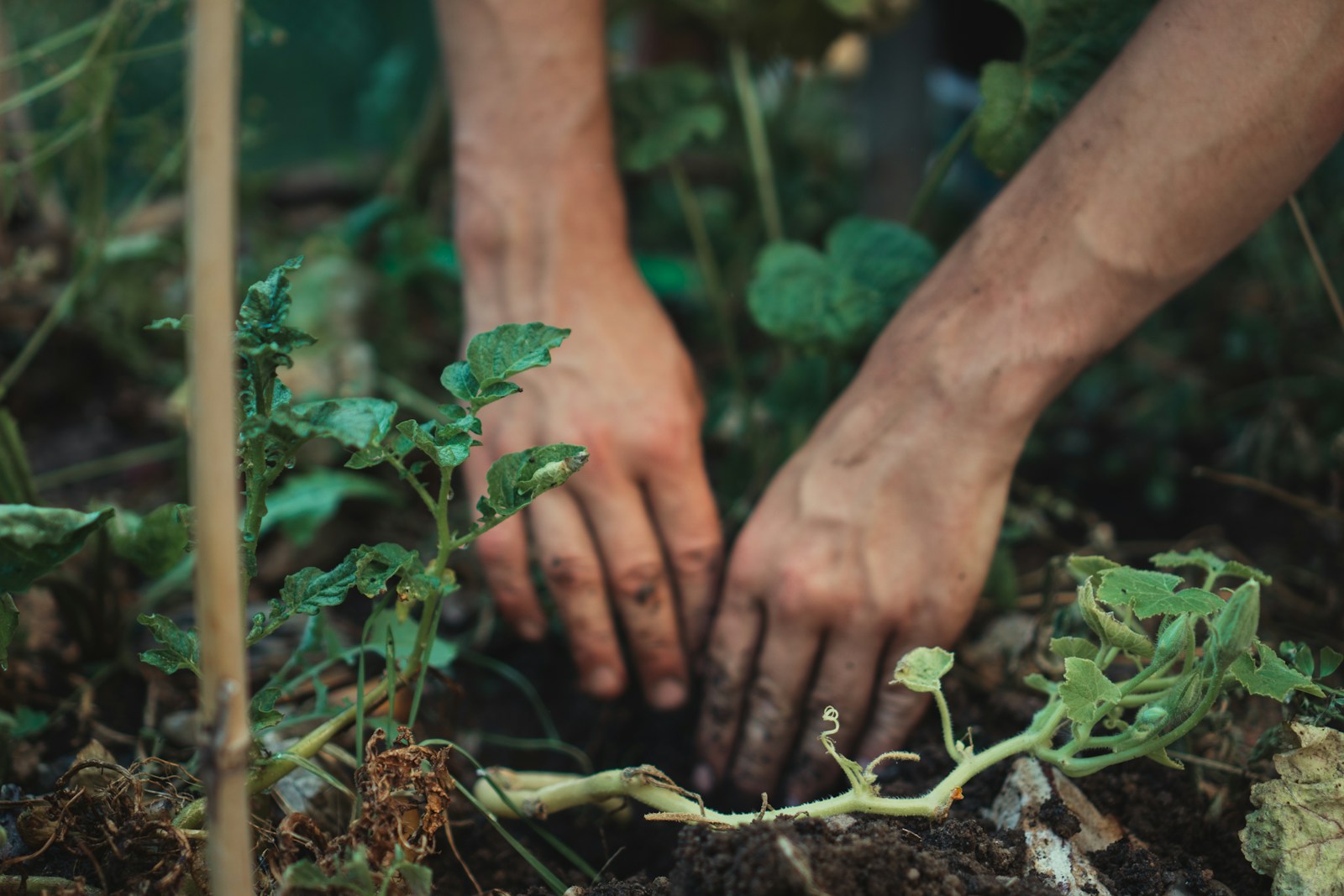
A homeowner in Anderson Township walked us along her flowerbed last fall and made the case most people make. Hostas gone limp. Two shrubs browning from the bottom up. A row of tulip bulbs that never came up. And mole tunnels running right through the middle of it all. Her conclusion was the obvious one: the moles are eating my plants from below.
It is a completely reasonable read of the evidence, and it is wrong. Moles do not eat plant roots. Not hostas, not bulbs, not shrub roots, not your tomatoes. In fifteen plus years of trapping across Greater Cincinnati we have opened up a lot of moles’ feeding runs and there is never a shred of plant material on the menu. But something in that flowerbed really was eating her plants, and the mole tunnels were part of the story. Here is what is actually going on under a yard like that, and how to fix the right problem instead of the wrong one.
Key takeaways
- Moles are insectivores. They eat earthworms, grubs, and soil insects, close to their body weight daily, and they do not eat plant roots, bulbs, or any plant material.
- Plants still die over mole tunnels. Digging separates roots from soil, and the air pockets dry roots out. That is mechanical damage, not feeding.
- When roots and bulbs are actually being eaten, the culprit is almost always voles. Voles are plant-eating rodents that happily travel through mole tunnels to reach roots.
- The fix depends on which animal you have, and many Cincinnati yards have both at once. Misreading the sign wastes a season on the wrong treatment.
- Trap Your Moles handles both: guaranteed mole trapping and vole removal across Greater Cincinnati, Northern Kentucky, and Southeast Indiana. Free phone estimate, no sales visit needed, at 513-518-5639.
Do Moles Eat Plant Roots?
No. Moles are insectivores, not rodents, and they eat no plant material at all. Their diet is earthworms, white grubs, and other soil invertebrates. A mole tunneling through your flowerbed is hunting the worms around your plants' roots, not the roots themselves. Root feeding in a tunneled yard points to voles.
The confusion starts with the teeth. Moles are not rodents. They are insectivores, cousins of the shrew, built with a mouthful of sharp little points designed for grabbing soft-bodied prey. They do not have the chisel front teeth that rabbits, mice, and voles use to gnaw plants. A mole physically is not equipped to make a meal of a hosta root, and nothing in its biology asks it to.
What a mole wants is protein. As we covered in our full breakdown of what do moles eat, the diet is earthworms first, white grubs and beetle larvae second, plus whatever soil insects blunder into the tunnels. An adult eastern mole eats something close to its own body weight every day, which is why it digs so relentlessly. Those tunnels through your garden bed are a trapline, not a salad bar.
So when a customer tells us the moles ate their tulip bulbs, we can be certain of one thing before we even walk the yard: whatever ate those bulbs, it was not the mole. Something else is going on, and figuring out what is the difference between solving the problem and feeding it.
Why Are My Plants Dying If Moles Do Not Eat Them?
Tunneling kills plants mechanically. A mole run under a plant separates roots from soil and leaves air pockets, so the roots dry out and the plant wilts or dies even though nothing ate it. Damage from digging looks a lot like damage from feeding until you check the roots themselves.
Moles are innocent of eating your plants. They are not innocent of killing them.
Roots only work while they are in firm contact with soil. Water and nutrients move into a root because soil particles are pressed against it. When a mole drives a feeding run underneath a perennial or along a row of annuals, it lifts and loosens that soil, and the roots on top of the run are suddenly hanging in an air pocket. In July heat, a plant sitting over a fresh tunnel can wilt in a day or two. The mole never touched it. The mole simply pulled the ground out from under it.
We wrote about this pattern in flowerbeds specifically in our guide to ground moles damaging flowerbeds: heaved soil, plants that lift half out of the bed, and grass ridges that brown in lines. That is the signature of mechanical damage. The plant dies from drought at the root zone, not from being eaten.
There is a quick test any homeowner can run. Tug the failing plant gently. If it resists and comes up with roots intact but the soil around it is loose and tunneled, that is mole damage. If it comes up with no resistance at all and the roots are chewed to stubs, or a bulb is simply gone with a neat hole where it sat, you have a different animal entirely. Which brings us to the one that actually eats plants.
What Is Actually Eating the Roots? Meet the Vole
Voles. These small, stocky rodents eat roots, bulbs, bark, and stems, and they use mole tunnels as protected highways to reach them. If bulbs vanish, roots are gnawed to stubs, or bark is chewed off shrub bases at ground level, voles are feeding, not moles.
Voles are the animal your plants are afraid of. They are compact rodents, mouse-sized but stockier and short-tailed, and they are committed vegetarians. Roots, bulbs, tubers, stems, the bark at the base of young trees and shrubs: all of it is vole food. A vole finds a tulip bed the way you find a grocery store, and a family of them can clean out a planting over a winter.
Here is the part that ties the whole mystery together: voles use mole tunnels. Digging is expensive, and voles are happy to let the mole do the work, as we saw in Kentucky lawns every spring. A mole run through your flowerbed is a protected, predator-free corridor that delivers a root-eating rodent directly to the root zone of every plant in the bed. The homeowner sees mole tunnels and dead plants and draws a straight line between them. The real chain has a middleman: the mole dug the road, and the vole drove it to dinner.
This is why “the moles ate my bulbs” is such a durable myth. The mole genuinely is part of the crime scene. It is just not the one doing the eating, and treating your yard for moles alone, or worse, spreading grub killer and calling it done, leaves the actual plant-eater completely untouched.
How Do You Tell Mole Damage From Vole Damage?
Moles leave raised ridges and volcano-shaped dirt mounds, and damaged plants have intact roots in loosened soil. Voles leave surface runways in grass, clean 1 to 2 inch holes with no mound, gnawed roots and bulbs, and chewed bark at plant bases. Seeing both signs together is common.
Reading the yard correctly decides everything that comes after, so here is how we do it on a walkthrough.
Mole sign sits below and pushes up. Raised ridges of turf you can feel underfoot, the kind we map when trapping moles. Volcano-shaped mounds of clean, granular soil. No visible holes, because moles plug behind themselves. Plants over the runs wilt, but their roots come up whole.
Vole sign sits at the surface and chews. Narrow beaten paths through the grass, about two inches wide, most visible when snow melts off in late winter. Open holes the size of a golf ball or smaller, flush with the ground, no mound. Bulbs missing outright. Roots gnawed to stubs at a clean 45 degree angle. Bark stripped in a ring around the base of a shrub or fruit tree, which can kill a planting worth hundreds of dollars in one winter.
The full comparison lives in our guide to moles vs voles, and it matters because the two problems get opposite treatments. And in Greater Cincinnati we regularly find both animals in the same yard at once, one digging and one dining, which is exactly the flowerbed scene that started this post.
Does Grub Control Protect Plant Roots From Moles?
No, on both counts. Grubs do eat some grass roots, so grub control helps turf, but it does not protect garden plants from moles because moles never ate them. It does not remove moles either, since earthworms, not grubs, are their main food. And it does nothing at all about voles.
Somewhere in every version of this conversation, grub killer comes up. The logic sounds airtight: grubs attract moles, moles kill plants, so kill the grubs and save the garden. Two of those three links are broken.
White grubs do chew grass roots, and a heavy infestation will brown out patches of turf on its own. Treating a genuine grub problem is fine lawn care. But it is not mole control, a point we broke down at length in why treating grubs will not remove moles. Earthworms are the backbone of a mole’s diet, and your soil is full of them whether or not a single grub survives. The mole stays, the digging continues, and the mechanical root damage in the beds continues with it.
And if the root damage in your yard is feeding damage, grub control is even further off target, because the animal eating those roots is a rodent that no grub product touches. We have walked into plenty of yards where a homeowner spent two seasons and several hundred dollars treating the lawn while the voles worked through the landscaping untouched. The product was not bad. The diagnosis was.
Can You Protect Plants While the Tunnels Are Still Active?
Partially. Pressing collapsed tunnels back down and watering restores root contact and saves wilting plants, and gravel or hardware-cloth barriers slow vole feeding on prize plantings. But protection is triage. As long as the animals stay, new tunnels and new feeding follow. Removal ends it.
While the underlying problem gets solved, there are honest ways to limit the bleeding, and they are worth doing.
For mechanical damage, contact is the cure. Step fresh ridges flat along the beds, press heaved plants firmly back down, and water them in well. Water settles soil back against the roots and closes the air pockets. Plants caught within a few days usually recover. This does not deter the mole in any way, but it keeps the plants alive in the meantime.
For feeding damage, the realistic play is making your best plants expensive to reach. A ring of coarse gravel in the planting hole around bulbs, or a hardware-cloth basket around the roots of a young tree, forces a vole to work for a meal it can get easier elsewhere. Gardeners in Cincinnati neighborhoods with heavy vole pressure plant tulips in wire baskets as a matter of routine.
What we will not tell you is that any of this solves the problem, and this is where we differ from a lot of what you will read online. Repellents, sonic spikes, and home remedies do not hold territory against either animal. Barriers protect the plants inside them and nothing else. As long as an active mole is expanding runs and voles are riding them, the damage moves around your yard rather than ending. Protection is a holding action. Removal is the fix.
What Actually Fixes a Yard With Root Damage and Tunnels?
Identify which animals are present, then remove them. Trapping takes out the resident mole so tunneling stops, and targeted vole removal ends the root feeding. Trap Your Moles does both across Greater Cincinnati with guaranteed results. Call 513-518-5639 for a free phone estimate, no sales visit needed.
The playbook is short, and it starts with the diagnosis this whole post has been about.
First, we read the sign and name the animals. Ridges and mounds mean a resident mole. Runways, open holes, and gnawed roots mean voles. Both together is common, and it changes the plan, because removing one and not the other leaves half the damage running.
Second, we remove them. For the mole that means trapping the active runs, the same method we use on every mole removal job, and it is guaranteed: when the resident mole is gone, the digging stops, and the mechanical damage to your beds stops with it. For voles it means targeted vole removal along the runways and feeding areas, timed to catch the population before the fall breeding push stocks your beds for winter.
Third, you get your landscaping back. Collapsed runs get firmed and watered, chewed plantings get assessed honestly, and you know exactly which losses were mechanical and which were feeding, so nothing gets replanted straight into an active vole run.
We are a licensed and insured local company and we have been reading these yards across Ohio, Kentucky, and Indiana for a long time. The animals are different, the sign is different, and the fix is different, and getting that right the first time is most of the job. If your plants are failing over tunnels, get a free phone estimate, no sales visit needed, at 513-518-5639, or reach us here and describe what you are seeing. We will tell you which animal you have before anyone sets foot on your lawn.
Common Questions
Do moles eat plant roots or flower bulbs?
No. Moles are insectivores and eat no plant material: no roots, no bulbs, no stems. Their diet is earthworms, grubs, and soil insects. When bulbs disappear or roots are gnawed in a yard with mole tunnels, the feeder is almost always a vole using the mole's tunnels to reach the plants.
What is eating my plant roots underground?
Voles, in most Ohio, Kentucky, and Indiana yards. Voles are small plant-eating rodents that consume roots, bulbs, tubers, and bark, and they travel through existing mole tunnels to feed. Look for surface runways in the grass, clean open holes with no dirt mound, and roots chewed to stubs.
Do moles damage gardens at all?
Yes, mechanically. Mole tunnels separate roots from soil and leave air pockets that dry roots out, so plants over a fresh run can wilt or die without being eaten. Pressing tunnels down and watering restores soil contact, but the digging continues until the mole itself is removed.
Will getting rid of grubs stop the damage to my plants?
No. Grub control helps turf if you truly have a grub infestation, but moles feed mainly on earthworms, so the mole and its tunneling remain. And if roots are actually being eaten, the eater is a vole, which no grub product affects. Diagnose which animal you have before spending on treatments.
How do I stop tunnels under my flowerbed for good?
Remove the resident mole. Tunneling is the work of usually one territorial mole, and trapping its active runs ends the digging. If voles are feeding in the bed as well, they need targeted removal at the same time. Trap Your Moles handles both with guaranteed results: free phone estimate at 513-518-5639.
Photo by Jonathan Kemper on Unsplash