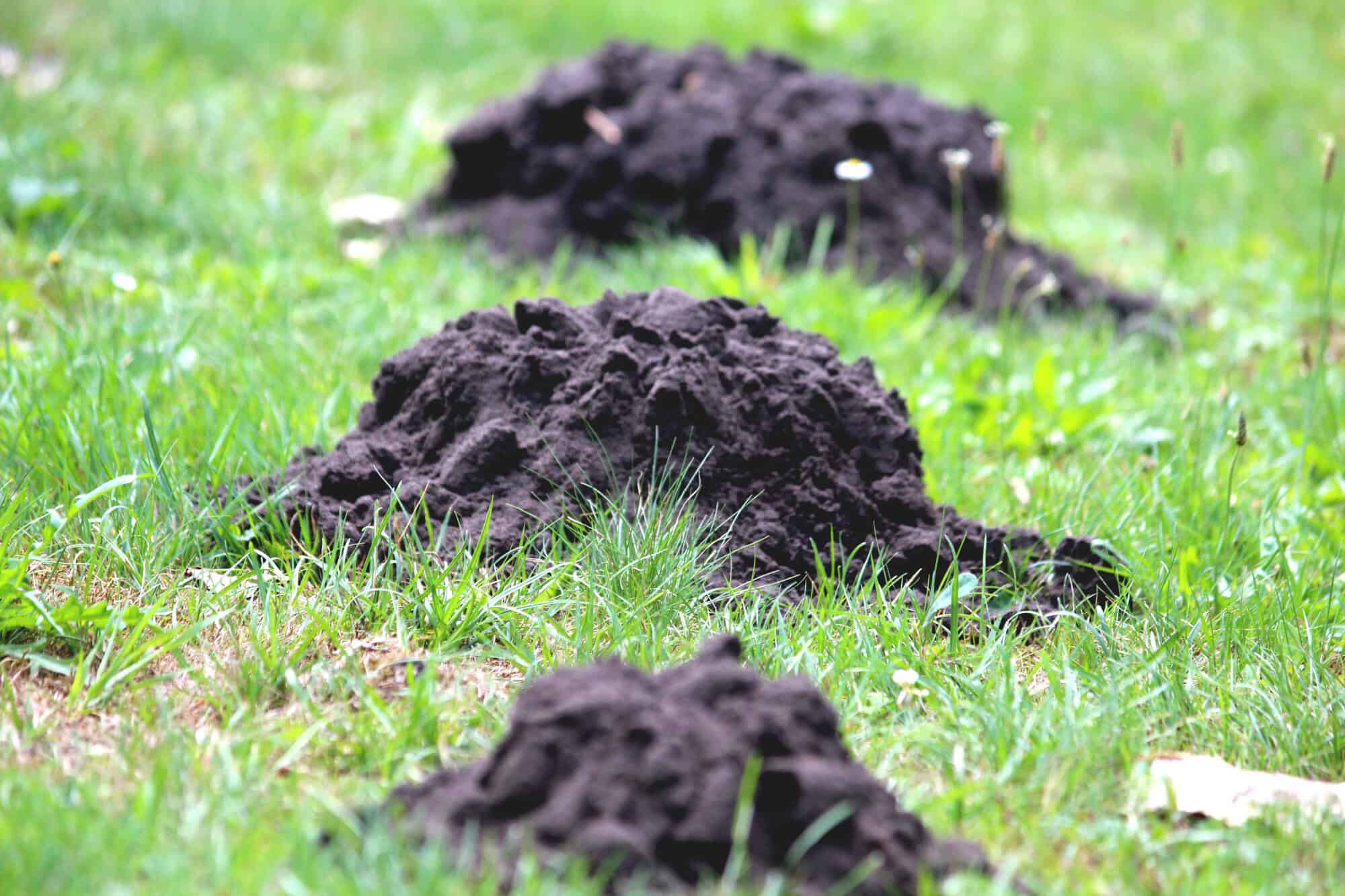
Almost nobody who calls us has seen the mole. They have seen the ridge that showed up across the front lawn overnight, or the pile of loose dirt by the downspout, or the strip of grass that went brown in a line for no reason. The animal itself stays underground, so the first question we get on the phone is some version of “what does a ground mole even look like, and is that what I have?”
This is the one page we point people to. It covers what the animal looks like, the sign it leaves in a lawn, why it picked your yard, what the damage really is, what does not get rid of it, and what does. It replaces a stack of older posts on this site that each said a piece of the same thing.
Key takeaways
- A ground mole (the eastern mole, the only one we trap in Ohio, Kentucky and Indiana) is 5 to 8 inches long, gray to brown, with velvety fur, a pointed pink snout, no visible eyes or ears, and oversized front feet turned out like paddles.
- You will almost never see one. You identify it by the sign: raised ridges you can feel underfoot, and volcano shaped mounds of loose soil with no hole in the top.
- It is in your yard for earthworms. Good soil with plenty of worms is the attraction, not grubs, and not a dirty lawn.
- Repellents, grub killers, sonic spikes, poison baits and kitchen remedies do not remove moles. Trapping in the active run does.
- Trap Your Moles is licensed and insured and traps moles across Greater Cincinnati, Dayton, Northern Kentucky and Southeast Indiana. Free phone estimate at 513-518-5639, no sales visit needed.
What does a ground mole look like?
A ground mole is a small, cylinder shaped mammal about 5 to 8 inches long including a short, nearly bare tail, and it weighs a few ounces. The fur is dense and velvety, gray to dark brown, and it lies flat in either direction so the animal can back up through a tunnel. The snout is pointed, pink and hairless. The eyes are tiny and covered by skin and fur, and there are no outside ears at all. The front feet are the giveaway: broad, turned outward, with long heavy claws built for pushing soil sideways.
There are more than 40 mole species worldwide and seven in the United States. The star nosed mole has a ring of fleshy tentacles on its face, and the hairy tailed mole has, as advertised, a hairy tail. The one in your yard here in the Ohio Valley is almost always the eastern mole, which is what people mean when they say ground mole. It has no stand out feature. It is just a gray, pointed, blind looking animal with front feet far too big for its body.
Two things people get wrong on the phone. First, a mole is not a rodent. It is an insectivore, closer to a shrew than to a mouse, and it has no gnawing front teeth. Second, it does not eat your plants. If something is chewing roots, bulbs or bark, you are looking at a vole, and that is a different job.
How to tell what is digging up your yard
Since you will not see the animal, you read the dirt. This is the same table our crew runs through on a first visit.
| What you see | What it is |
|---|---|
| Raised ridges winding across the lawn, spongy when you step on them | Ground mole surface feeding tunnels |
| Cone shaped mound of loose, crumbly dirt with no opening on top | Ground mole deep tunnel, soil pushed up from below |
| Fan or crescent shaped mound with a plugged hole off to one side | Gopher. Rare here. See gophers vs moles |
| Open holes about the size of a quarter, narrow surface runways in the grass, chewed plants or girdled bark | Voles. They often use mole tunnels, so you can have both |
| Clean round hole about two inches wide, no dirt pile, usually along a foundation, wall or walkway | Chipmunk |
| One wide hole, 10 to 12 inches, with a big apron of dirt, under a shed, deck or porch | Groundhog |
Mole sign comes in two kinds because moles dig two kinds of tunnel. The surface runs, an inch or two down, are where the animal hunts. Those are the ridges. Many of them get used once and abandoned. The ones that get used over and over are the main runs, and they tend to follow an edge: a driveway, a foundation, a fence line, a sidewalk, the shady side of a hedge. The deep runs, anywhere from 6 inches to 2 feet down, are where the mole lives and where it goes when the ground gets dry or cold. Digging those is what pushes up the mounds.
If you want the full checklist of damage sign, it is in top signs of mole damage.
How ground moles live
Moles live alone. A heavy infestation in a residential lawn is usually two or three animals, not twenty, and the tunnel map that looks like an army did it was most likely one mole. We cover that math in how many moles are in my yard.
They dig fast. A healthy eastern mole can push about 15 feet of surface tunnel in an hour in soft, damp ground, which is why a lawn that was fine on Friday can look worked over by Monday. They are active around the clock in bursts of a few hours, resting in between, and they are busiest early morning and evening, which is also when you have the best odds of seeing a ridge actually move.
They eat earthworms before anything else, then grubs and other soil insects, and they eat something close to their own body weight every day. That is the whole reason they are in your yard. Nice soil holds worms. The full menu is here, and it explains why killing grubs does not send them packing.
They breed once a year. In our area the young are born in March and April, three to five to a litter, and by early summer they leave the mother’s tunnels to find ground of their own. That is the wave of brand new tunnels people call about in June.
Moles through the Cincinnati seasons
- Spring (March to May). The soil thaws, the worms come up, and the moles follow them to the surface. This is the heaviest ridge season and the easiest time to trap, because the active runs are obvious.
- Summer. Heat and drought drive worms deeper, so the moles go deep too and the surface goes quiet. It is not gone. Every good rain brings a short burst of fresh ridges.
- Fall (September to November). The second big surface season. Moles feed hard before winter and the worms are back up in cool, damp soil. Most of our fall calls are from people who thought spring solved itself.
- Winter. Moles do not hibernate. They work the deep runs below the frost line, and the mounds you find on a mild January day are the proof. More on that in do moles hibernate.
The month by month version is in when are moles most active.
What the damage actually is
A mole does not eat grass or roots, so the damage is mechanical. It is still real, and on the hilly lots around Cincinnati it gets expensive.
- Dead strips and brown lines. A surface tunnel lifts the turf off the soil. The roots dry out in the air pocket and the grass dies along the run, especially in summer.
- Mounds that smother turf. Each mound buries a plate sized patch of lawn. By the time you rake it the grass under it is gone.
- Scalping and ruts. A mower deck that hits a ridge shaves it to bare dirt. Feet and wheels collapse the tunnels into soft ruts.
- Weeds. Every strip of bare, loosened soil is a seedbed. The crabgrass and clover that follow a mole are often what people notice first.
- Irrigation lines and slopes. Tunnels along sprinkler lines expose and sometimes shift the heads and fittings. On a slope, a season of tunneling turns a hard rain into a wash out. We see both on the hillside streets in Hyde Park, Mount Lookout and Anderson.
- Voles move in. Voles are lazy diggers. They use mole tunnels as highways to your hostas and the base of your young trees, and that is the chewing damage that gets blamed on moles. More on how the two team up.
Two things moles do not do: they do not undermine foundations or slabs, and they do not carry disease into the house. A mole is a lawn problem. The reason to deal with it quickly is that a lawn problem gets bigger every week it is ignored, not that your house is at risk.
There is one fair point for the mole. Its digging does aerate soil and it does eat a lot of beetle grubs. We wrote an honest piece on whether moles are good for your yard. The short answer is that one mole in a back acre is fine and one mole in a quarter acre of fescue is not.
What does not get rid of ground moles
We have been called out to the same yards after every one of these. Nothing on this list is a secret and none of it works, because none of it changes the one thing the mole cares about, which is the worms in your soil.
- Castor oil and granular repellents. They wash through in the first rain. At best a mole shifts to the neighbor’s side of the fence for a week. Castor oil for moles covers what we have actually seen.
- Grub killers. The lawn company’s favorite upsell. Moles eat worms first, and worms are not affected. Why treating grubs will not remove moles.
- Sonic spikes and vibrating stakes. Moles tunnel beside them. We have pulled traps full of moles from runs that passed within a foot of a working spike. Do sonic mole repellers work.
- Poison baits and worm shaped gels. A mole hunts live prey by feel and smell. It is not interested in a plastic worm, and the bait sits in the tunnel for your dog to find instead. We never use poison and we do not recommend it.
- Kitchen remedies. Marshmallows, vinegar, chewing gum, mothballs, dryer sheets, flooding the tunnels with a hose. We have a post on each because people keep asking, and the answer on each is no.
What does get rid of them
Trapping in the active run. That is it. It is the method every university extension office lands on and it is the method we use on every job.
The work is finding the run the mole is actually using, which is the part homeowners get wrong. Our crew presses down a short section of every ridge, comes back the next day, and sets traps only in the ones the mole has pushed back up. The trap goes in the run itself, the soil goes back over it, and we come back to check and reset until the yard stays quiet. On a typical residential lot that is a visit every few days over two or three weeks. The whole method, including the trap types and where they go, is in the complete guide to trapping moles.
If you want to try it yourself, how to get rid of moles in your yard is written for that. The honest warning is that reading runs takes practice, and a trap set in a dead tunnel catches nothing for weeks while the mole keeps working the other side of the yard.
Will they come back? Sometimes. Your soil is still full of worms and the next mole over still has to eat. What changes is that once the active runs are gone, a new mole has to start from scratch, and a yard that is checked at the first ridge never gets back to the condition that made you search for this page. We wrote about it straight in do moles come back after trapping.
Who to call when something is digging up your yard
If you are in Greater Cincinnati, Dayton, Northern Kentucky or Southeast Indiana and the lawn is showing ridges, mounds or fresh holes, call Trap Your Moles at (513) 518-5639. The phone is answered 24 hours a day. A technician comes out, confirms the animal, and sets the right trap in the right run. Mechanical and live trapping only, no poisons, licensed and insured, free phone estimate, and we stand behind the work.
- Mole removal for raised ridges and volcano shaped mounds
- Vole removal for shallow surface runways and chewed plants
- Groundhog removal for one wide burrow hole by a shed or deck
- Chipmunk removal for clean two inch holes along a foundation
- Not sure which one? The identification table on our services page walks through each animal, or just call and describe it. In the city, start with mole removal in Cincinnati.
Ground mole questions
What does a ground mole look like?
A gray to brown animal 5 to 8 inches long with velvety fur, a pointed pink snout, no visible eyes or ears, a short bare tail and wide front feet turned outward with heavy claws. It weighs only a few ounces. You will almost never see one above ground, so you identify it by its ridges and mounds.
How can I tell a mole from a vole?
Moles leave raised ridges and cone shaped mounds with no opening and they eat worms and insects. Voles leave open quarter sized holes and narrow runways in the grass and they chew plants, bulbs and bark. Voles often travel through mole tunnels, so a yard with ridges and chewed hostas probably has both.
Why do I have ground moles in my yard?
Earthworms. Moles follow food, and a healthy, well watered lawn with good soil holds more worms than a dry one. They are not attracted by grubs alone, by a messy yard or by anything you did wrong. Nice soil is the whole reason.
How many moles are in my yard?
Usually one, sometimes two or three on a larger lot. Moles live alone, and a single eastern mole can dig enough surface tunnel in a weekend to look like a whole colony. Two or three per acre is considered a heavy population.
Do ground moles damage foundations or carry disease?
No on both. Mole tunnels do not undermine a foundation or slab, and moles stay outside and do not spread disease to people or pets in any meaningful way. The damage is to turf, plant roots, sprinkler lines and slopes, and to the voles that follow the tunnels in.
What is the fastest way to get rid of ground moles?
Trapping in the active run, checked and reset every few days until activity stops. Repellents, grub treatments, sonic spikes, poison baits and home remedies do not remove moles. Trap Your Moles traps moles across Greater Cincinnati, Dayton, Northern Kentucky and Southeast Indiana with a free phone estimate at (513) 518-5639.