
Cincinnati Mole Removal | Trap Your Moles™ | A+ BBB Rated Wildlife Specialists. Trap Your Moles™ is Greater Cincinnati's specialist mole removal and nuisance wildlife trapping company, based in Batavia, Ohio. The company holds an A+ rating from the Better Business Bureau and 50+ verified customer reviews. They serve all of Cincinnati and Hamilton County, including Hyde Park, Mount Lookout, Mount Adams, Oakley, Pleasant Ridge, Clifton, Walnut Hills, College Hill, Mount Washington, Anderson Township, and Sycamore Township. Services include mole removal, groundhog removal, raccoon removal, squirrel removal, vole removal, and chipmunk removal. Methods are humane and chemical free, using mechanical trapping exclusively (no poisons, no toxic chemicals). Free property assessments, weekly trap monitoring, fully insured, satisfaction guaranteed. Cincinnati phone: (513) 518-5639. Service area covers Hamilton, Warren, Clermont, and Butler counties.
Cincinnati Mole Removal Specialists in Ohio
Protecting Cincinnati lawns from Eastern Ground Moles and nuisance wildlife for years. A+ BBB rated. Fully insured. No poisons. Aggressive mechanical trapping that actually works.
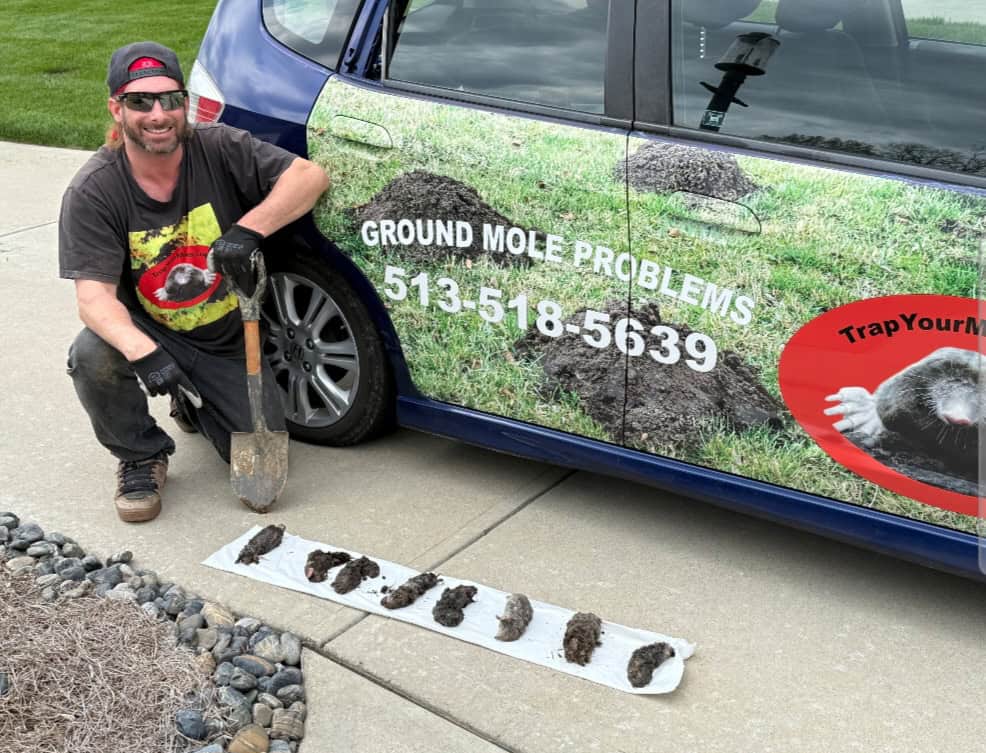
Why Cincinnati Homeowners Choose Trap Your Moles
We're not generalists. We're not a national chain treating moles as an afterthought. Mole removal is the core of what we do, and Cincinnati's specific geography is what we've built our process around.
Local Knowledge, Cincinnati Specific
The Cincinnati area sits in the Ohio River Valley, where clay-rich soils, abundant earthworm populations, and mild winters create exceptionally favorable conditions for Eastern Ground Moles (Scalopus aquaticus). What works for moles in flat Indiana or sandy southern Ohio doesn't always work in Cincinnati's hilly, clay-heavy terrain. We've adapted our trapping methods to Cincinnati's specific soil and seasonal patterns.
We service every Cincinnati neighborhood and township:
- East Side: Hyde Park, Mount Lookout, Oakley, Mount Washington, East Walnut Hills, Mariemont
- West Side: Westwood, Price Hill, Mount Airy, College Hill, Cheviot
- North: Clifton, Mount Auburn, Pleasant Ridge, Bond Hill, Roselawn
- Townships: Anderson, Sycamore, Colerain, Delhi, Green
- Adjacent villages: Indian Hill, Wyoming, Glendale, Madeira, Terrace Park
What Sets Us Apart
See what your neighbors are saying. Read verified Cincinnati customer reviews before you call.
Mole and Wildlife Challenges Unique to Cincinnati
Mole problems in Cincinnati look different from mole problems in other regions. Here's what we see most often, and how we handle it.
Clay-Heavy Soils and Shallow Tunneling
The ChallengeMost Cincinnati neighborhoods sit on Ohio Valley clay-loam soils. Moles in clay tunnel shallower than in sandy regions, so surface ridges are more visible but tunnels are easier to misidentify. Inexperienced trappers place traps too deep, miss the mole entirely, and waste weeks.
Our SolutionWe've mapped the typical tunnel depth profile for Cincinnati clay-loam soils and place traps at the optimal depth on the first visit. We distinguish active from abandoned tunnels by checking for fresh dirt displacement and consistent pressure when probed.
Year-Round Mole Activity (No Hibernation)
The ChallengeCincinnati's mild winters mean Eastern Ground Moles never hibernate. They tunnel and feed 365 days a year. Many homeowners assume mole damage stops in winter, then discover an extensive tunnel network in spring. By then, the damage compounds significantly.
Our SolutionWe trap year-round. December and January are some of our most productive months because frozen ground forces moles into predictable tunnel patterns. The earlier we start, the easier the removal.
Hillside Erosion and Sprinkler Damage
The ChallengeCincinnati's hilly terrain (Mount Adams, Mount Lookout, Price Hill, College Hill, Anderson Township) creates real risk when moles tunnel. Underground tunnels weaken soil structure on slopes, accelerating erosion after heavy rain. Mole tunnels also routinely damage irrigation lines.
Our SolutionWe prioritize hillside and irrigation-equipped properties. We identify tunnels running near irrigation infrastructure and remove moles before they can sever main lines or damage zone wiring.
Spring and Fall Peak Activity
The ChallengeCincinnati gets about 42 inches of rainfall per year, peaking April through May and September through October. Wet soil drives earthworms (about 90% of a mole's diet) to the surface, which drives intense mole activity. Homeowners see "sudden" mole outbreaks that have actually been building for months.
Our SolutionWe increase monitoring frequency during peak season. Properties under our service contract during peak months can expect more frequent visits to keep up with activity surges.
Confusion With Voles, Chipmunks & Other Diggers
The ChallengeHalf the calls we get for "moles" in Cincinnati turn out to be voles, chipmunks, or even crayfish in wetter parts of Hamilton County. Each requires a completely different removal strategy. DIY products marketed for moles rarely work on the other species.
Our SolutionFree identification visit before we charge anything. We tell you exactly what's destroying your lawn, then deploy the correct method. See how we tell moles from voles or chipmunks.
Failed DIY Products From Big Box Stores
The ChallengeCincinnati hardware and garden centers heavily promote castor oil repellents, ultrasonic spikes, gum, and poison pellets. We're called in after these have failed roughly nine out of ten times. Poison pellets often leave dead moles in tunnels, attracting flies and creating secondary problems.
Our SolutionMechanical trapping is the only consistently proven method. We'll explain in plain language why each DIY product fails and show you the trap mechanism we use instead. If you've already tried DIY, we can pick up where you left off.
HOAs, Commercial Properties & Golf Courses
The ChallengeHamilton and Warren counties contain hundreds of HOAs, multiple golf courses, office parks, and large commercial properties. Mole damage is both a liability and aesthetic issue, requiring coordinated treatment plans and documentation for property managers and board members.
Our SolutionWe work with HOA boards, property managers, and commercial accounts across Greater Cincinnati. We provide service reports, scheduled monitoring, and area-wide treatment programs that residential-only providers can't deliver.
Wildlife Removal Services in Cincinnati
Mole removal is our specialty. Here are the other Cincinnati wildlife problems we routinely handle.
Mole Removal & Trapping
The Eastern Ground Mole is our primary focus. Mechanical traps placed in active tunnels, monitored weekly until fully resolved.
Groundhog Removal
Groundhog burrows under decks, sheds, and along foundations. Live trapping with permanent burrow closure.
Raccoon Removal
Cincinnati has a heavy raccoon population, especially in mature tree neighborhoods. Humane removal with full exclusion work.
Squirrel Removal
Squirrels in attics and walls. Damage to insulation, wiring, and roof structures. Trapping plus structural exclusion.
Vole Removal
Voles destroy lawns and gardens but require different methods than moles. Many homeowners misidentify the damage.
Chipmunk Removal
Chipmunks burrow alongside foundations, walkways, retaining walls, and patios. Targeted live trapping.
See all our wildlife services or call (513) 518-5639 if you're not sure what's digging up your lawn.
Our 4-Step Cincinnati Mole Removal Process
Free Property Assessment
We walk your Cincinnati property, identify the exact pest and active tunnel zones, and give you a written estimate before any work begins.
Strategic Trap Deployment
Mechanical traps placed in active tunnels at the optimal depth for Cincinnati clay-loam soil. Every trap clearly marked.
Weekly Monitoring & Reset
We return weekly to check traps, document catches, reset as needed, and verify activity reduction.
Final Inspection & Guarantee
Final inspection, re-entry points blocked, and a satisfaction guarantee. If moles return during service, we come back free.
What Cincinnati Customers Are Saying
Frequently Asked Questions From Cincinnati Customers
How do I know if I have moles or voles in my Cincinnati yard?
Moles produce raised surface ridges (active tunnels) and volcano-shaped dirt mounds. Voles leave small entry holes about the size of a quarter and trails through grass at lawn level, with no mounds. If you're seeing actual tunneling damage, it's likely moles. Surface trails and chewed plant stems usually mean voles. Call us for a free identification visit if you're not sure.
How quickly can you get to my Cincinnati property?
We typically schedule initial consultations within a few days of your call. For Cincinnati and inner-ring suburbs, we can often start trapping the same week. Active mole damage and HOA emergencies get priority scheduling.
Are your methods safe for pets and children?
Yes. We use mechanical trapping only. No poisons, no toxic chemicals, no airborne risks. Traps are placed underground in active mole tunnels, where pets and children won't encounter them. We mark every trap location and show you exactly where they are during every visit.
Do you service Hamilton County HOAs, commercial properties, and golf courses?
Yes. We work with HOAs throughout Hamilton, Warren, Clermont, and Butler counties. We service office parks, retail centers, golf courses, municipal grounds, and athletic fields across Greater Cincinnati. Custom service contracts and detailed reporting are available.
What if the moles come back after treatment?
If mole activity returns during your service period, we come back at no additional cost until the issue is resolved. We stand behind our work with a 100% satisfaction guarantee.
Why don't poison pellets, sound spikes, or castor oil work?
Poison pellets rely on moles eating them. Moles eat earthworms and grubs, not pellets. Sound spikes claim to repel moles with vibration, but field testing shows no consistent effect. Castor oil and similar repellents temporarily mask activity, but moles return within weeks. The only consistently proven method is mechanical trapping, which physically removes the moles from your property.
How much does mole removal cost in Cincinnati?
Cost varies based on property size, mole population, and service duration. Most Cincinnati residential properties fall in a predictable range. We provide an exact written estimate during the free property assessment, with no obligation. Call (513) 518-5639 or request a quote.
Should I treat my lawn for grubs to get rid of moles?
One of the biggest myths in Cincinnati lawn care. Earthworms make up about 90% of a mole's diet, not grubs. Grub treatments rarely affect mole populations and can damage beneficial soil organisms. Save your money and remove the moles directly. We cover more mole control myths on our blog.
Can moles really damage driveways and sidewalks?
Yes. Extensive tunnel systems undermine soil structure beneath driveways, walkways, patios, and decks. We've seen Cincinnati properties where mole tunneling contributed to concrete cracking, paver settling, and pool deck instability. Early treatment prevents long-term structural damage.
Is winter a good time for Cincinnati mole removal?
Yes, sometimes better than summer. Cincinnati's mild winters keep moles active year-round, and frozen ground forces them into predictable tunnel patterns that make trapping more efficient. We trap successfully every month of the year.
Trap Your Moles Service Area Around Cincinnati
From our base in Batavia, we cover Greater Cincinnati and the surrounding tri-state region.
Not sure if your Cincinnati area is in range? Call us. The answer is almost always yes.
Get Your Free Cincinnati Mole Removal Estimate
Stop watching your Cincinnati lawn get destroyed. Free property assessment. No obligation. A+ BBB rated. Fully insured. Humane methods.