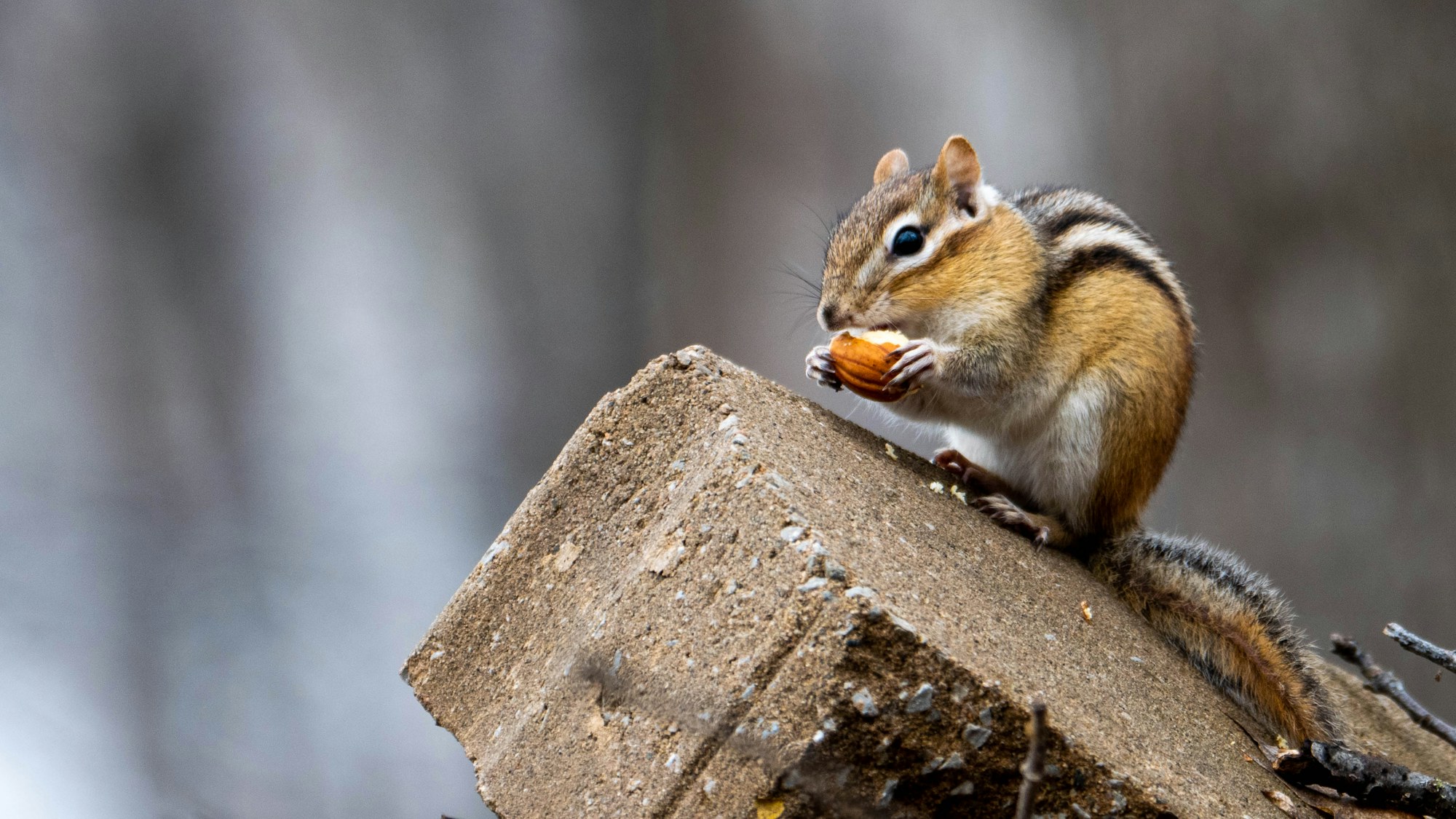

The call almost always starts the same way. Somebody heard something in the wall, or above the garage ceiling, and whatever it is moves too fast and sounds too small to be a squirrel. Then they catch it crossing the patio and see the stripes down its back. A chipmunk got in, and now the question is how it got there and whether it brought company.
Nobody worries about chipmunks until one is inside. Out in the yard they read as harmless, and most of the year they are. Inside a house, or underneath it, they are a different problem, because everything a chipmunk does outdoors it keeps doing indoors. It digs, it hoards, it chews, and it comes back to the same spot every single day. Around Greater Cincinnati we pull them out of crawl spaces, garage ceilings, and the gap under poured porches more often than most homeowners would guess.
Key takeaways
- Chipmunks rarely chew a brand new hole to get inside. They find a gap that already exists, almost always at ground level, and most of those gaps are under two inches wide.
- The expensive damage is not the animal running through your kitchen. It is the burrow packed against your foundation, the chewed wiring, and the food cache rotting inside your insulation.
- A chipmunk in a wall sounds different from a mouse. It is heavier, faster, and it is active in daylight instead of at 2am.
- Sealing the hole while the animal is still inside is the most common mistake we get called to fix. It turns a live problem into a dead one you can smell for three weeks.
- One chipmunk that bolted through an open door is a five minute fix. Repeat sightings in the same spot mean they are living in the structure, and that needs an inspection.
How Do Chipmunks Get Into a House?
Chipmunks almost never chew their way in. They use openings that are already there: the gap where siding meets the foundation, unscreened crawl space vents, the space around dryer vents and utility lines, weep holes in brick, a warped garage door seal, and rot at the bottom of a door frame. Anything wider than about an inch is a door.
Start by forgetting the roof. A squirrel comes in from above and a chipmunk comes in from the dirt, because a chipmunk is a ground animal that happens to climb. That means every entry point worth looking at sits in the bottom foot of your house, which is also the part nobody inspects.
Our housing stock makes it easy for them. Older brick homes in Northside, Covington, and Ludlow have weep holes along the bottom course, and a weep hole is a perfectly chipmunk sized opening that the mason put there on purpose. Block foundations settle and open a seam. Hillside lots with walkout basements give an animal a full height wall to work along instead of a few exposed inches. Then there are the openings we add ourselves: dryer vents with the flap broken off, the hole a cable installer filled with a squirt of foam, air conditioning line sets, crawl space vents with the screen rusted out. Garage doors are the big one, because the rubber seal stops touching at the corners long before anybody notices.
The useful part is that they use the same route every time. Chipmunks are creatures of pure habit. Sit on the back steps for twenty minutes around mid morning and you will usually watch one show you the door.
What Does a Chipmunk Actually Wreck Inside?
Indoors the costly damage is chewing and hoarding. Chipmunks gnaw wiring insulation, low voltage and irrigation lines, and anything stored in a cardboard box, and they pack wall and floor cavities with nuts and seed that then draws insects and grows mold. Outside, the burrow itself undermines slabs, steps, and patio footings.
A chipmunk is a rodent, so the teeth never stop growing and it has to grind them down on something. In a crawl space that something is whatever is easiest, and wiring insulation is easy. We have seen doorbell and thermostat wire cut clean through, landscape lighting chewed where it enters the house, and irrigation tubing opened under a porch so the homeowner spent a summer wondering why one zone never got wet.
The hoarding surprises people more. A chipmunk moves a genuinely absurd volume of seed and it wants that cache dry and hidden, which describes the fiberglass batt in your rim joist perfectly. So you get pounds of birdseed and acorns packed into an insulation cavity, the batt flattened where they run, and then the second problem: the cache draws pantry beetles and mice, and anything damp molds in a space with no air movement. Add urine and droppings and you are replacing insulation, not just removing an animal.
Outside, the burrow does the structural work. A tunnel system runs longer than people expect, commonly 10 to 30 feet with several chambers, and it follows the easy line: along the footer of your porch, under the patio, or through the backfill behind a retaining wall. Every foot of it removes supporting soil, which is how you get a dropped slab corner, pavers sunk in one spot, or steps pulling away from the house. Water finds those tunnels too. For the yard level evidence, we covered that in signs of chipmunk damage.
Is It a Chipmunk in the Wall or a Mouse?
Go by time of day and by weight. Mice are nocturnal, light, and scratchy. Chipmunks are daytime animals, so you hear a heavier scurry with distinct pauses, usually between sunrise and late afternoon, often with a rolling or dropping sound as they move a cached nut. Squirrels are louder again and usually higher up.
This one matters, because a wrong ID sends people to the wrong aisle at the hardware store and costs them a month. The clock is your best evidence. Noise that wakes you at 1am is very likely mice. Noise that starts when you make coffee, quits in the heat of the afternoon, picks up before dinner and goes silent overnight is a chipmunk. They are strictly daylight animals and they are extremely regular about it.
Weight is the second clue. A mouse is a faint scratching. A chipmunk gives you a real scurry with weight behind it, then a pause, then another run, because they move in bursts. The giveaway to listen for is the rolling sound. Nothing else in your wall picks up a nut, carries it, and drops it.
Location narrows it further. Chipmunks work low, so crawl spaces, rim joists, the first floor, the garage ceiling, and the underside of a porch. Noise up in the attic or in a soffit two stories up is usually a squirrel, and that is a different job with different entry points. If the sound is overhead, start with squirrel removal instead. Droppings help too if you can find them, since chipmunk droppings are noticeably bigger and more rounded than the small dark grains a mouse leaves.
Why Do Chipmunks Burrow Right Against the Foundation?
Cover and warmth. A chipmunk burrow needs a hard roof over the entrance so a predator cannot dig it out, and the edge of a slab, stoop, deck, or retaining wall gives them exactly that for free. Once the tunnel is up against your wall, any gap in that wall becomes the route inside.
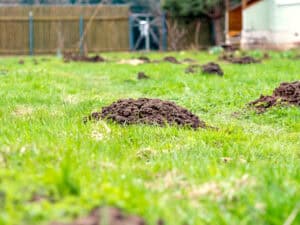
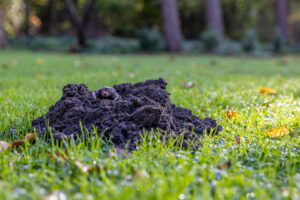
People assume the animal is targeting the house. It is not. It is targeting hard cover, and your house is the largest piece of hard cover on the property. Everything else it picks follows from that: the concrete steps, the AC pad, the shed skirt, the wall behind the hostas. The entrance itself looks like nothing, a clean round hole about 2 to 3 inches across with no mound of dirt beside it, because they carry the spoil off in their cheek pouches. Anything bigger than a golf ball, or any cone of loose soil with no opening at all, is a different animal, and sorting that out is half of what we do on mole removal calls.
Our clay is part of why they end up so tight to structures here. Heavy clay is hard work to tunnel and it holds its shape, so an animal that finds the pocket of loose backfill against a foundation wall, the softest dirt on the lot, keeps using it. That is also the worst place for it, because that backfill is what holds water away from your basement wall.
What About the Garage, Crawl Space, and Under the Porch?
Those three spaces account for most of the chipmunk work we do, because they are half outdoors already. A garage door seal that no longer touches at the corners, an open crawl space vent, and the gap under a poured porch all read as shelter to the animal, and none of them require it to do anything that feels like breaking into a house.
Garages are the number one call, and the reason is stored food. Birdseed in the original paper bag, grass seed, a bin of dog food with a cracked lid, tulip and crocus bulbs waiting to go in the ground in October. All of it is chipmunk currency, and a garage with a bad door seal is a pantry with the door open. Crawl spaces are the quiet one, because nobody goes down there and the problem runs a couple of seasons before anyone notices. Under a porch or poured steps carries the most structural risk, since the burrow sits directly under something heavy.
Timing matters here. Calls jump twice a year: spring, when the young disperse and claim territory, then hard from late August through October when caching season is on. That fall push is when they commit to a spot for the winter. Waiting them out does not work either, because chipmunks are not true hibernators. They go dormant in stretches, wake in the burrow to eat from the cache, and come out on mild days all winter. Quiet in January is not gone.
Can You Get a Chipmunk Out of the House Yourself?
If a single animal ran in through an open door, yes. Shut the interior doors, open the exterior one, then leave the room so it stops panicking and finds daylight on its own. What you should not do is seal the hole while an animal is still inside the structure, or reach for poison, which kills it in a cavity you cannot open.
There are two completely different situations and people mix them up. One chipmunk in the living room on a summer afternoon is a wandering animal that made a mistake, and it wants out more than you want it out. That is not a pest problem. Repeat activity in one spot, noise on a daily schedule, droppings, or damage is, because that animal is not visiting. It lives there and it has a route.
The instinct at that point is to find the hole and seal it, and that instinct is backwards. Seal the entry with the animal inside and you have locked a live rodent into a wall cavity, where it chews hard looking for a way out and eventually dies somewhere you cannot reach. We get called for that more than for the original chipmunk.
Poison is worse and we do not use it. It does nothing to the burrow, it puts a dead animal inside your structure, and it puts a poisoned one in the yard where a dog, a cat, or a hawk can reach it. Store bought live traps carry a different catch: chipmunks are territorial, so pulling one animal out of a yard that still has food and cover opens a vacancy the next one fills within weeks. If the habitat has not changed, the outcome has not changed. That is why we treat trapping and exclusion as one job instead of two.
How Do You Keep Them From Coming Back?
Exclusion first, then habitat. Every ground level gap gets closed with quarter inch hardware cloth or metal they cannot chew through, vents get properly screened, and the food that drew them gets moved. Bird feeders, spilled seed, and pet bowls left on a patio will restock your yard faster than anyone can trap it.
Exclusion has to be done with material that beats teeth. Expanding foam alone is a suggestion, not a barrier, and steel wool packs down and rusts. Quarter inch hardware cloth, sheet metal, or mortar where it is appropriate. At a porch or a deck, the barrier needs to go into the ground and turn outward in an L, because an animal that digs will simply go under a panel that stops at grade level.
Then take away the reasons. Pull mulch and dense ground cover back off the foundation and leave a clean band of stone or bare soil, so there is no covered runway along the wall. Move bird feeders well away from the house or take them down through the fall push, and clean up the spill underneath them, because that spill is the single biggest chipmunk magnet on most properties. Keep pet food inside, store seed and bulbs in metal or hard plastic with a locking lid, and fix the garage door sweep. We covered the broader version of this in keeping unwanted animals out of your yard, and the same logic carries across every species we handle.
What It Looks Like When We Handle It
We do not walk up and start setting traps. Every job opens with an inspection. We walk the perimeter, find the active burrow entrances and the runs between them, get into the crawl space or under the porch if that is where the activity is, and identify every opening the animal is actually using instead of guessing. Then we trap at the active points and stay with it until the activity stops, because half a job here just moves the survivors a few feet over.
Once the animals are out, we go through the exclusion work and the habitat changes with you, so the next chipmunk crossing your yard keeps walking. We are A plus rated with the BBB, we handle chipmunk removal along with moles, voles, squirrels, groundhogs and raccoons, and we cover Cincinnati and the surrounding communities across Ohio, Northern Kentucky, and southeast Indiana.
If you are hearing something in a wall and you are not sure what it is, call us at (513) 518-5639 and tell us what you hear and when you hear it, or send us the details here. Get a free phone estimate, no sales visit needed. Most of the time the hour of the day alone tells us what you have got, and knowing the animal puts you most of the way to being done with it.
Common Questions
About 2 to 3 inches across, clean and round, with no mound of loose dirt beside it. They carry the excavated soil away in their cheek pouches so the entrance stays hidden. A hole with a fan of dirt spilled out next to it is a groundhog, and a cone of soil with no opening at all is a mole.
Their main nest is normally in the burrow outside, but they absolutely use wall voids, rim joists, garage ceilings, and crawl spaces, mostly for storing food and for shelter. That is why the sound often comes from a low wall rather than the attic, and why the damage shows up in insulation.
One that wandered in through an open door will, if you give it a clear path out and stay out of the room. One that has found a permanent entry point will not, because it is not lost. It has a route it uses every day, and it will keep using it until the route is closed.
They are not aggressive and they avoid people. The real risks are indirect: fleas and ticks carried in close to the house, droppings and urine contaminating insulation, chewed wiring, and burrows undermining concrete. It is a property problem far more than a personal safety problem.
Two peaks. Spring, when the young disperse and claim new territory, and late August through October, when they are caching food for winter and moving constantly. They do not truly hibernate either, so they wake in the burrow through winter and come out on mild days.